How to Mulch a Garden

Video Preview

Introduction

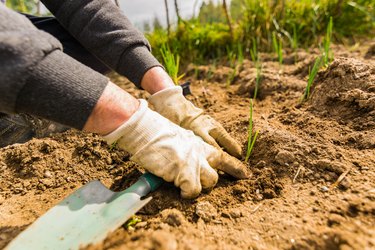
Gardening doesn't have to be a lot of work, especially if you use mulch in your vegetable and ornamental beds and pathways. Mulch is a huge garden timesaver because it helps prevent weeds, reduces the need to water, moderates soil temperatures, adds organic matter to the soil as it breaks down and helps your garden look tidy.

By: Willi Galloway

Length: 4:32

Comments: 5

View more articles by this author

Flag | RSS

Instructions

Text Size: +
Difficulty: Moderately Easy

Tips & Warnings:

  • Tree trimming companies are a wonderful source of mulch. Call one in your area--they may be happy to deliver a load of chippings right to your driveway.
  • Inorganic mulches such as rock or black plastic will also work to prevent weeds from growing, but they don't break down to enrich the soil.
  • Consult a nursery about using commercial products such as hydro-mulch or plastic rollout mulch to cover larger areas, including lawns and slopes.
Step1
Grass clippings and straw work great in vegetable gardens because they break down quickly. Leaves and pine needles break down a bit more slowly and are better used in ornamental beds. Wood chips and bark work well in pathways and ornamental beds because they take a long time to decompose and have a uniform texture.
Step2
Remove existing weeds from the area you plan on mulching.
Step3
Water the soil before mulching. Mulch helps soil stay moist, but if you apply mulch to dry soil it actually prevents water from soaking into the ground. So, it is very important to water your soil deeply prior to mulching. Use a slow, steady stream of water and allow the water to soak into the soil 6 to 8 inches deep.
Step4
Layer mulch 2 to 4 inches deep, thick enough to block light and keep weeds from sprouting. Using more than the recommended depth has no benefit.
Step5
Keep mulch away from the crown of plants. It's important to think “donut,” not “volcano,” when mulching. Piling mulch up against the trunks of trees and shrubs (so it looks like a volcano) or covering the crown of plants can slowly kill them. Prevent this problem by leaving a ring of bare soil around the base of each plant, like a donut.
Step6
Mulch breaks down slowly over time. Replenish mulch when only a thin layer is left. The beauty of mulch is that as it decomposes, it actually enriches your garden soil, much like compost. By adding mulch, you improve your soil while at the same time reducing the need to water and pull weeds.

Resources

Comments

| View All Comments
Tippy

Tippy said

Flag This Comment

on 6/7/2008 Thank you for a great article.

Anonymous

Anonymous said

Flag This Comment

on 3/21/2006 When mulching, it is great to use horse or cow manure, it is one of the best mulches I've ever used and it works wonders mixed with dried leaves. It may also be incorporated to the soil as a fertilizer and as a soil texture enhancer.
Note: horse manure mulch reduces its volume greatly once laid out, so every few weeks it will be necessary to add more. It works wonders also keeping weeds away.

Anonymous

Anonymous said

Flag This Comment

on 11/22/2005 Leaves will decompose much faster when shredded. Craftsman makes a Leaf Shredder that uses a 'string trimmer' to shred the leaves for about $100. The resulting mulch can then be turned into the soil or used to cover garden areas. These leaves are the best fertilizer for what ails your garden.

Anonymous

Anonymous said

Flag This Comment

on 11/22/2005 Be careful when using newspaper. Squirrels seem to love it as a nesting material and made quick use of it this spring. They dug beneath the other mulch materials and spread the newspaper throughout the planting beds! What a mess!

Anonymous

Anonymous said

Flag This Comment

on 11/22/2005 Organic composted mulches composed of leaves, bark and wood contribute far more to soil improvement than a mulch of only shredded or chipped bark. Bark is composed primarily of lignin, which is slow to decompose and less nutritious.

Post a Comment

POST A COMMENT

Request a New How-To Video Article

Looking for more How To information? Chances are there’s an eHow member who knows how to do what you’re looking to do. Submit an article request now!

eHow Article: How to Mulch a Garden

eHow Expert: Willi Galloway

Willi Galloway

Expert: Home & Garden
Profession: West Coast Editor of Organic Gardening magazine, Creator of DigginFood.com

Location: Seattle, Washington

Related Ads

Home & Garden
Willi
Meet Willi Galloway eHow’s Home & Garden Expert.