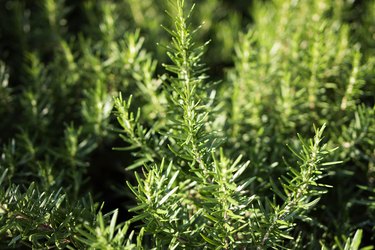
If you're interested in growing herbs, consider adding rosemary (Salvia rosmarinus, formerly Rosmarinus officinalis, USDA zones 7-11) to your list, but make note of the common problems of rosemary plants to help your herbs thrive. Its delicate foliage is an attractive grayish-green and the plant fills the environment with its herbal aroma. Rosemary is generally easy to grow, but it might develop some problems if it's not given correct conditions or develops disease or pest problems. Catching these problems early can be essential to keep a rosemary plant in tip-top shape.
Not Enough Water
Video of the Day
Rosemary grows outdoors year round in U.S. Department of Agriculture plant hardiness zones 7 through 11, but it also makes a good potted houseplant. Native to rocky and sandy Mediterranean regions, it requires excellent drainage to thrive. The plant only needs a modest amount of water and tolerates drought well once established.
Video of the Day
But like any plant, insufficient water can cause its foliage to wilt. If this happens, test the soil with your fingertip and, if it's dry several inches deep, water the plant well. If you've caught the problem in time, the plant should revive and be undamaged. In the future, water whenever the top few inches of soil feel dry to your fingertip to avoid this common problem with rosemary plants.
Overwatering and Fungi
A wilting rosemary plant can also indicate over-watering, a common problem with rosemary plants that tends to promote root rot. If the problem's not corrected, roots become slimy and soft, and stems wilt and eventually die back. If the plant's soil is wet and soggy, and some roots are affected, remove the plant from the soil, trim off damaged roots and replant the rosemary in fresh soil. You can also dust cut roots and stems with cinnamon, a natural fungicide, to help the plant recover. If all the plant's roots are affected, the problem probably can't be corrected and it's best to discard the plant.
Overly wet conditions can promote other fungal problems, such as powdery mildew, a disorder that causes fluffy white fungus to grow on stems and foliage. Eventually, these plant parts dry up and die. In either case, trim away damaged parts of the plant, using pruning shears to cut into healthy tissue below the damaged areas. Clean your blades with rubbing alcohol between cuts to prevent spreading disease.
Rosemary Pest Problems
A rosemary plant can also attract several types of pests. These include aphids, which are soft-bodied greenish pests, and spittlebugs which leave a white, frothy liquid on the plant. Whiteflies, which are tiny whitish flying insects, may also appear. You might also see evidence of spider mites, microscopic pests that leave visible webs covering young leaves and stems. All these pests suck plant juices, causing foliage to wilt, dry up and eventually drop from the plant.
Control a minor infestation by washing them off the plant with a strong stream of water. If an infestation becomes severe, spray the rosemary plant with insecticidal soap until it's dripping wet. Dilute the soap at a rate of 5:1 (5 parts water to 1 part insecticidal soap), and repeat the application according to label directions, as needed.
Preventing Problems With Rosemary Plants
Planting rosemary in the garden in a spot that gets full sun and has excellent drainage helps prevent fungal problems with rosemary plants. Rosemary can spread to reach a width of 2 to 4 feet, so space multiple plants at least 2 feet apart to ensure good air circulation, which also helps prevent fungal growth. If your soil contains clay and tends to drain slowly, amend the soil by adding some coarse sand at planting to improve its drainage, or plant rosemary in a raised bed.
If you grow rosemary indoors as a houseplant, ensure the container has a drainage hole. Keep it well-spaced from other plants. Always let the plant drain well after watering; never let its pot sit in a water-filled saucer. Place an indoor rosemary where it receives as much sunlight as possible.
Whether indoors or in the garden, check plants often for pest problems, because these are best controlled when caught early, before damage is severe.