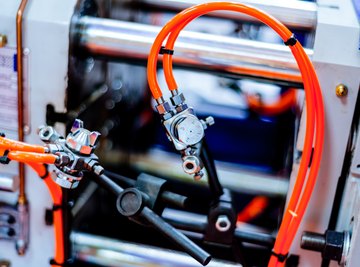

Different types of molding processes form plastic into the desired shape based on the plastic’s intended use. Plastic manufacturing relies on different types of molding in a variety of shapes. Plastic is a synthetic material that is soft or semi-liquid when hot. The soft plastic is placed in molds, and then the plastic cools, or sets. After setting, the plastic is in the desired shape and is removed from whatever types of molding were used to create it. Thermoplastics can be melted down and reformed if necessary, however thermoset plastics cannot be reheated.
TL;DR (Too Long; Didn't Read)
Too Long;Didn't Read (TL;DR)
Plastic manufacturing relies on different types of molding processes to form liquid, melted plastic into solid shapes. Casting, injection molding, blow molding, compression molding and rotational molding have different uses and advantages in plastic manufacturing.
Plastic Molding Using Casting
Plastic molding using casting is the simplest method as plastic manufacturing as it requires the least amount of complex technology. Plastic is simply heated so it turns into a fluid, and then transferred into a mold. The plastic is left to cool and the mold is removed. This process can be used for intricate shapes and is performed under low pressure.
Injection Molding of Plastic
Injection molding of plastic creates high-quality three-dimensional objects that can be commercially reproduced. The injection molding process begins by melting plastic in a hopper. The melted, liquid plastic is injected into a tightly closed, chilled mold. The plastic quickly takes the shape of the surrounding mold. Once it has completely set, the mold is opened to release the plastic object. The mold can generally be used many times before needing to be replaced. Plastic items such as yogurt cups, butter tubs, plastic toys and bottle caps use the injection molding process.
Blow Molding Plastic Manufacturing
Blow molding is a process used for making hollow objects such as piping or milk bottles. In the blow molding plastic manufacturing process, plastic is heated until molten. The liquid, molten plastic is injected into a cold mold. The mold has a tube set within it, which has a particular shape when inflated. While the plastic is molten, air is blown into the tube and the plastic is formed around the tubing. The plastic is left to cool and removed from the mold.
Compression Molding of Plastic
Compression molding of plastic is the most labor-intensive type of molding process. Since compression molding is more complicated, it is typically only used for large-scale production purposes rather than mass production. For example, boat hulls and car tires are made using the compression molding method. Molten plastic is poured into a mold. Then a second mold is pressed into it. This squeezes the plastic into the desired shape before the plastic is left to cool and removed from the mold.
Rotational Molding of Plastic
Toys, shipping drums, storage tanks and consumer furniture made of plastic are all made using rotational molding. In this method, liquid plastic forms each object as it is added to the mold from the inside. Two mechanical arms hold the mold in place. The arms constantly rotate the mold at the same level, while molten plastic is placed inside. As the mold turns, the plastic coats the inside of the mold to create a new hollow, plastic object.
References
About the Author
Based in Bristol, Philippa Jones has been a music journalist and script writer since 2007, working across a range of radio programs in the U.K. and Australia. Her articles have appeared in "Impact Magazine," "The Mic" and in local newspapers. She holds a Bachelor of Arts in politics from the University of Nottingham.