Non Flowering Plants for Kids
Non-flowering plants are some of the simplest plants to grow and care for, which makes them ideal test subjects for a child's green thumb. Some kids may not find non-flowering plants as interesting or pretty as flowering ones, but they often grow quickly and will not irritate allergies. It is easy to find non-toxic, non-flowering houseplants or potted plants that will grow well with basic care. Does this Spark an idea?
-
Wandering Jew
-
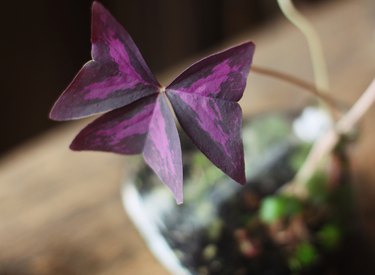
Wandering Jew plants are ideal in hanging baskets because their stems will trail over the sides of the basket for a healthy, cascading effect. A popular variety of wandering Jew has deep purple stems and foliage, which makes this plant stand out from the standard green non-flowering plant. Wandering Jews can produce small flowers, but many do not. The plant is primarily grown for its unique foliage and easy propagation. Children can care for a wandering Jew by watering it when the soil is dry to the touch, and making sure it gets indirect sunlight, or morning or evening sun. In cool climates, this non-toxic plant can thrive potted outdoors during the summer, then indoors by a window during the winter. In warm climates, the plant can survive in the ground year-round, but will spread quickly and can become invasive.
Dracaena or Lucky Bamboo
-
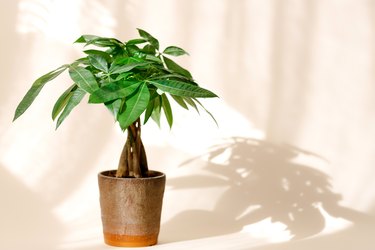
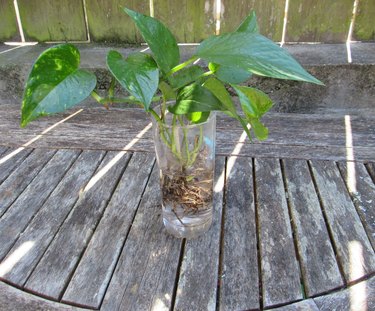
Dracaena is an African non-flowering plant also found in some regions of southern Asia and Central America. In North America, people typically grow shrubby dracaena as a house plant. It has thin stems and bendable leaves. This non-toxic plant has the potential to produce flowers, but rarely or never does. Dracaena stem cuttings that are permanently "planted" in a vase of water are sold in the United States as "Lucky Bamboo." Kids can easily care for lucky bamboo by making sure the water level stays high enough. They can also watch the roots grow from the bottom of the stems in a clear vase. The plant requires indirect sunlight and temperatures between 65 and 75 degrees for maximum growth.
-
Philodendron
-
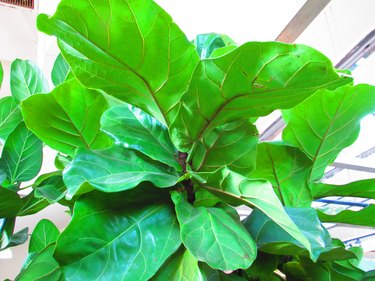
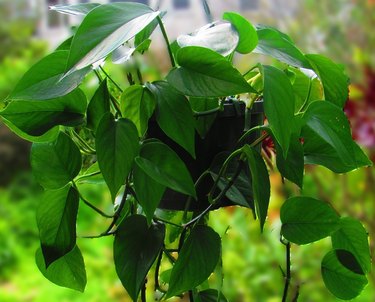
Philodendron plants are grown for their green and varied foliage. Different philodendron can have different shaped leaves in varied shades of green. The plants have the potential to produce flowers, but most house-grown varieties do not. Children can easily care for philodendrons by watering them only when the soil is dry and dusting the leaves when necessary to keep them clean and shiny. They are fast-growing and difficult to kill. The plant thrives best in temperatures between 60 and 72 degrees. Philodendron are poisonous, so they may not be good for homes with small children or pets.
Spider Plant
-
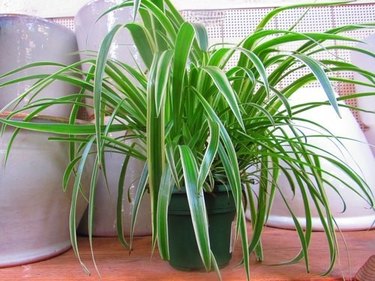
Spider plants are named for their thin, arching leaves that resemble spider legs. The plant is a fast-grower that works well in hanging baskets because they sprout new, little growth bundles on stems that hang down below the main plant. These can be fun for kids to observe. The spider plant is easy to care for as well, requiring indirect sunlight and water when the soil is dry. Kids can prune the new growth bundles as desired and either replant or discard them.
-
References
- Photo Credit potted plant image by Joy Fera from Fotolia.com