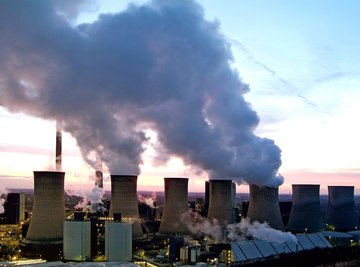

Coal is one of the most plentiful and least expensive fossil fuels in world, and currently accounts for almost 40 percent of energy production in the U.S. The availability and affordability of this fuel source, however, come with trade-offs regarding its effects on the environment, particularly the atmosphere.
Pros of Coal Use
Coal has three primary advantages compared to other fuel sources, both non-renewable and renewable: abundance, affordability and low capital expense needed to build coal-powered generation plants. Coal deposits can be found in over 70 countries around the world, with estimates on global reserves of just under 1 trillion tons. If these estimates are correct, coal reserves will last about twice as long as oil and gas reserves at current rates of consumption. Abundance leads to low and stable prices, while the relative ease of converting coal to energy results in power generation plants that can be built using less capital than facilities powered by many competing fuel sources. These advantages can make coal the fuel of choice, particularly in developing countries.
Downside of Coal
The advantages of coal are now being weighed against two significant disadvantages: the release of carbon dioxide into the atmosphere when it is burned, and the dangers posed by the extraction process. The vast majority of the global scientific community is now in agreement that the release of greenhouse gases such as carbon dioxide resulting from the burning of coal and other fossil fuels is warming the Earth’s atmosphere and contributing to global climate change, including disappearing glaciers, rising sea levels, and changing weather patterns. Coal-fired power plants are also the greatest contributor to mercury pollution. A second issue with coal is an extraction process that can be dangerous, particularly in developing countries, and other environmental consequences, including acidification of streams.
The Future of Coal
Coal’s role in global warming has resulted in the calls in the U.S. and Europe for scheduled closures of coal-powered plants to reduce greenhouse emissions. However, reductions in the developed world may be countered by continued demand for coal-fired plants in China and elsewhere. Ultimately, however, the future of coal consumption may depend on one factor, generating energy at the lowest possible cost. If an alternative energy source becomes the most affordable option, the use of coal would likely decline over time. The current cost advantages of coal, however, will likely keep this fossil fuel in demand for some time to come.
References
About the Author
After working for 21 years as a licensed adviser specializing in corporate and private finance, Scott Krohn began his writing career in 2008 covering a variety of topics including business, personal finance, health, and IT. He graduated from Cal State University, Long Beach with Bachelor of Arts degree.