Coming up with fun and creative ideas for school projects can be a real chore. If you are a student studying life cycles or a teacher trying to find creative ideas for your classroom, you have many ideas to choose from for a project involving life cycles. From plants to insects to animals to humans, many creatures have distinct life cycles that you can easily illustrate for a school project.
Animal Life Cycles
Frogs make popular subjects for life cycle study, because they go through so many distinct, recognizable stages. From eggs to tadpoles to full-fledged frogs, these croakers have quite a cycle to go through. People also fall into this category, as we are so similar to our animal friends. We go through many stages from birth to childhood. For projects involving people or animals, try creating a poster board with illustrations. You can even make it a "lift the flap" style creation by putting photos of the cycle stages on top as flaps and then pasting information about that life cycle stage underneath each photo. For something a little smaller, try creating a book of the life cycle. You can write it out as the story of one frog (or person) and the stages he goes through toward development. Include creativity and factual information this way, and add interest with cute and colorful photos.
Insects
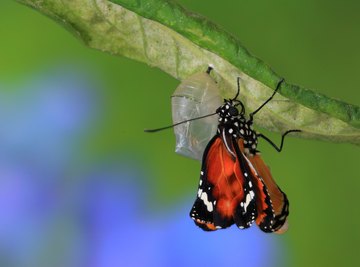
Various insects, like butterflies and ants, go through interesting life cycles. Try creating a 3-D project for these buggy creatures. For a butterfly, make a cocoon out of papier mache. Create a felt or clay caterpillar and butterfly, and act out the sequence of events in the life cycle stages as you narrate the steps. If papier mache isn't your thing, you could even use a small brown sock for the cocoon. Wrap it up and around the caterpillar, and then pull a switch and get the butterfly back out (you can hide the butterfly in the sock to begin with). For another type of insect, you will need to show it going through the larva stage. You may be able to accomplish this with a white sock like you would for the butterfly cocoon. Or make an edible display. Your ant egg can be a jelly bean, then the larva can be a gummy worm or even a marshmallow. Dip the marshmallow into some sauce for the pupa, and the ant can be the gummy variety or made using pretzel sticks poked into a chocolate pastry.
Plant Life Cycles
For a nice plant project that may take some setting up, try to have a plant in each stage of a life cycle to display. Get seeds, then have a plant that has just begun to sprout and another plant that has grown to full size. Demonstrate the stages and discuss what the plant needs to get from one step to the next. For something to entertain your classmates, consider a puppet show. Start with a seed, which can be made by gluing construction paper onto a popsicle stick. Have the seed tell the story of his life. "Plant" him by pulling him down behind a flower pot. Then get a new popsicle stick with green construction-paper buds for the next stage. Your final stage is to replace the buds with a full paper flower.
References
Photo Credits
RyanKing999/iStock/Getty Images