
A school science fair is an opportunity for students to explore science topics in depth. Water evaporation is one such topic that students may decide to choose. This process involves molecules in a liquid state (water) transferring to a gaseous state (water vapor). Evaporation is part of the water cycle; evaporation, condensation and precipitation. Different projects and experiments can be done to demonstrate water evaporation for a science fair.
Heat or Air Flow
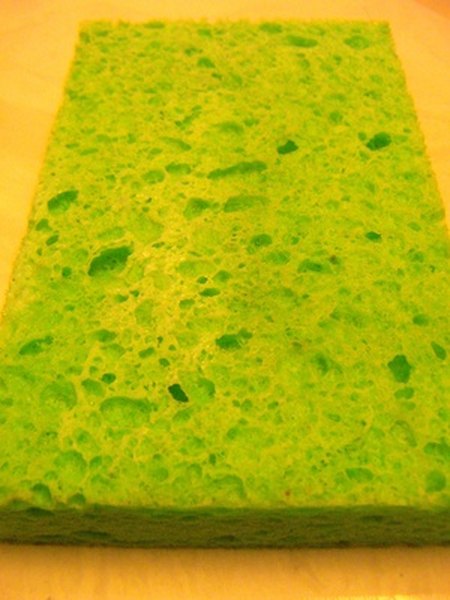
Wet three sponges and place them on separate plates. Place one plate in front of a fan that is on, the second in front of a portable heater and the third will be left separate from the other to use as a control. Observe the length of time that it takes for each sponge to dry completely. Keep a record in a log of the results. Make note in the journal of how long it took for each sponge to dry completely and which one dried faster. Chart the findings on a graph to show at the science fair.
Water Cycle
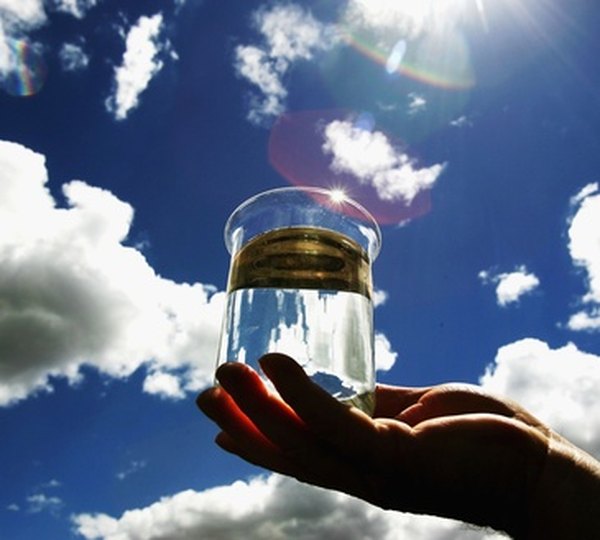
Place a small bowl inside a large clear bowl. Fill the large bowl with a small amount of water making sure that no water gets into the smaller bowl. Cover the larger, clear bowl tightly with plastic wrap and secure it with a rubber band. The plastic wrap will cover not only the larger bowl, but the smaller bowl in the center. Place a small weight in the center of the plastic wrap, above the small bowl and set the project in front of a window with sunshine. Observe how long it takes for the plastic wrap to form condensation. Keep a journal of your results and note that the water eventually disappears. Create a chart that graphs the results you recorded. Hypothesize about the disappearance of the water and come to a conclusion as to what happened to it. Use the facts of the water cycle to determine your answers.
Sugar and Salt
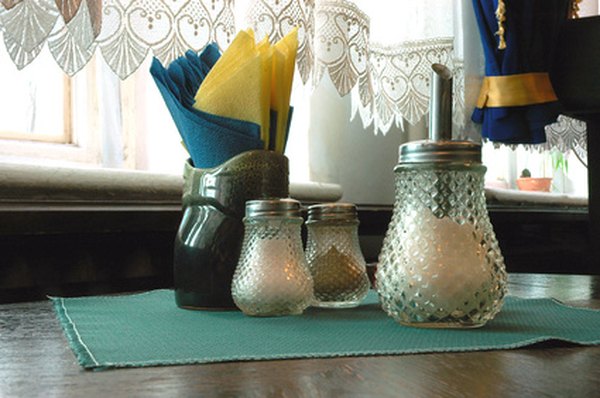
Measure one cup of water into two separate clear glasses. In the first glass of water, stir three tablespoons of table salt. Measure three tablespoons of sugar and mix it into the second glass of water. Place both glasses next to each other on a counter out of the sunshine. Record the rate of evaporation the different chemicals have on the water. Keep track of the results over a period of five days, note which glass of water evaporated at a faster rate. Chart your results on a graph.
References
About the Author
Kim Bentley began her professional writing career in 2010. She writes for various websites, bringing knowledge on topics such as education, workforce development, employee training and medical billing and coding. Bentley holds a Bachelor of Science in post-secondary education from the University of Akron.
Photo Credits
petroleum distilation image by Heng kong Chen from Fotolia.com