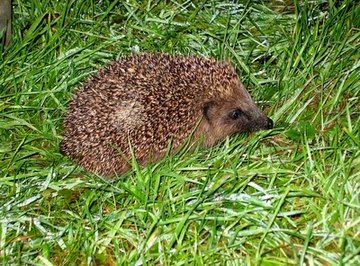
The term "hedgehog" is actually a general term for 17 individual species of hedgehogs. Their common name comes from how and where they find food since they're often found foraging for insects, worms and other small creatures in shrubs and hedges. The "hog" portion of the name comes from their small pig-like snorts they make as they forage.
In the wild, the hedgehog habitat ranges across the savannas of Africa to grasslands as well as in woodlands, meadows and even gardens across Europe and Asia.
Description and Classification
Hedgehogs are a member of the Erinaceidae family, which includes many species of hedgehogs that are native to Europe, Asia and Africa along with the gymnure (also called moonrats) that are native to Southeast Asia. This family is defined by their shrewlike appearance, long and slender snouts, and short tails.
Hedgehogs are larger than shrews but are still quite tiny. On average, they weigh between 15 and 39 ounces and only measure 1-2 inches in length. This is comparable to a small teacup.
Their defining characteristic is their coat of rigid, prickly and sharp spines that cover their entire back. These spines give these tiny animals protection against predators. When threatened, they'll curl into a tight, spiny ball that protects their faces and bellies from predators.
On average, a hedgehog has 6,000 tiny spines on its body. When hedgehogs are born, their spines are not yet rigid. Very soon after birth the spines will harden. By the time their eyes open three weeks after birth, the spines will have fully hardened.
Hedgehog Habitat and Hedgehog Range
The main thing that a hedgehog environment needs is shrubbery, grasses and, as the name suggests, hedges. They require well-drained soil environments along with areas for nesting.
They've made their way around the world as they're often kept as pets. In the wild, though, they're found in grasslands, woodlands and meadows of Africa, Europe and Asia. In Africa, the hedgehog range in the wild savannas, deserts and grasslands throughout eastern, western and central Africa. They also are found throughout Europe and Asia in grassy meadows, gardens and woodlands.
In seasonal climates, hedgehogs will hibernate through the coldest months of the year. When they live in hot climates like deserts and savannas, they often "hibernate" in a process called aestivation in order to survive through periods of drought and intense heat.
Hedgehogs are mostly ground-dwelling creates that live among shrubs, small trees and tall grasses. However, they are also capable of swimming and climbing trees, which allows them to get around woodlands much easier.
Hedgehog Diet
Hedgehogs mostly eat ground-dwelling insects like beetles and caterpillars. They also eat other types of invertebrates like slugs and worms. Other food sources for hedgehogs include frogs, fungi, small snakes, lizards and snails. They'll also scavenge and eat any decaying organisms they can find along with the occasional small mouse, small bird and various types of eggs. Hedgehogs are mostly carnivorous, but they will occasionally eat plants.
Hedgehogs are nocturnal, which means they're mostly active at night. They use the cover of darkness as well as the advantage of sleeping prey/predators in order to hunt and avoid predation of themselves. Their nocturnal status has lead to them relying mostly on smell and hearing for hunting; their eyesight is quite poor.
Sometimes, hedgehogs have been observed to eat their own young. This is especially true of male hedgehogs, but female hedgehogs have been seen eating their own young especially if their nest is disturbed.
Predators
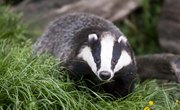
Hedgehogs' main predators are large birds of prey like hawks and owls along with badgers, foxes and mongooses. Their spines are quite effective for protection and only a few predators, like the badger, are able to "unfurl" a curled up hedgehog.
References
About the Author
Elliot Walsh holds a B.S in Cell and Developmental Biology and a B.A in English Literature from the University of Rochester. He's worked in multiple academic research labs, at a pharmaceutical company, as a TA for chemistry, and as a tutor in STEM subjects. He's currently working full-time as a content writer and editor.
Photo Credits
hedgehog image by Edsweb from Fotolia.com