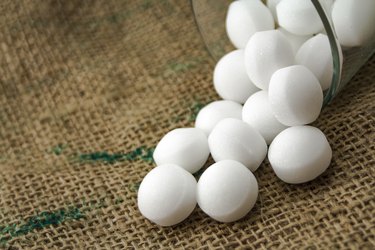
Mothballs may seem relatively harmless when you purchase them, but in reality, they contain pesticides made from toxic, harmful chemicals. These chemicals, naphthalene or paradichlorobenzene, are considered household toxic waste and are not meant to be discarded in the regular trash or flushed down the drain. Instead, you must drop them off at a household hazardous-waste collection site.
Gathering the Mothballs
Video of the Day
Whether the mothballs are loose or in their original box, wear rubber gloves to avoid getting any of the chemicals on your hands. Scoop up loose mothballs and place them in a sealable plastic bag or disposable container with a lid. This kind of limited exposure to the mothball fumes is generally considered safe. If you are particularly sensitive, you might consider wearing a respirator to avoid breathing in the fumes.
Video of the Day
Finding a Disposal Facility
Ask at your city hall, or search on the internet for a hazardous-waste-management disposal site. Information may be listed online under residential trash and recycling information, or under household hazardous-waste management. Because mothballs are considered a hazardous substance, they require a special disposal method. Some regions set aside one or two days a year for residents to take such materials to a designated drop-off site; read up on your local information for specifics regarding dates and locations, as these vary by region and by year.
Dropping Off the Mothballs
If your community only accepts household toxins once or twice a year and there is no nearby facility that will accept them soon, store the collected mothballs in an airtight container well out of the reach of children and pets. Clearly mark the container as "mothballs" or "poison" so you do not forget what's inside. On the day you are to dispose of the mothballs, place the container in a bin to protect your vehicle in case of leaks.
Removal from Fabrics
Mothballs break down over time and may leave a residue behind on the clothing or textiles they have touched. Wash each item thoroughly according to instructions on the care tag. Avoid touching the residue or breathing it in. It may take more than one washing to thoroughly get rid of the chemicals. If the washed items still smell of mothballs after several washings, air them out on a clothesline on a sunny day for several hours, and then wash them again.