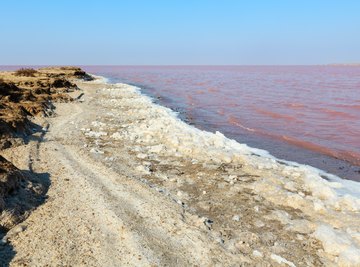
When rain, ocean waves or even wind thrash against a beach or rocky cliffs, they erode away at the Earth and deposits bits or rock, dirt and sand on the ground or into the air, a process called deposition. The first effects of deposition begin with weathering, a mechanism which defines how rocks get broken down into smaller pieces like dirt and sand by the weather. These small pieces of dirt and sand are then picked up by forces of nature in a process known as erosion.
Natural Erosion Forces

The natural forces that move or erode the cliffs on a beach, often turning these rocks into fine beach sand, are the same ones that deposit them. Four primary agents help in the process of deposition. Frozen rivers or ice masses -- glaciers -- pick up rocks and drop them as they move. Gravity works as an agent for deposition when rocks fall or tumble downhill. Wind picks up lighter forms of sediment, such as dust and sand, and drops them when it stops blowing. Water works on behalf of deposition in many forms, by moving sediments in rivers and streams, through rainwater runoff not absorbed into the ground, and when ocean waves crash against the shore.
The Elements of Deposition
Several elements affect when and where deposition occurs once rocks erode. The velocity, or speed of wind and water plays an important part because as they slow, heavier sediments drop out and are deposited. The thickness, heaviness and size of sediment also affects the rate of deposition. Larger and denser particles are heavier and land first before, less dense particles. The shape of sediment also affects deposition rates, as round pieces of sediment settle more quickly than flat pieces.
Landforms Produced by Deposition
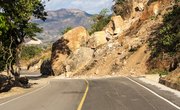
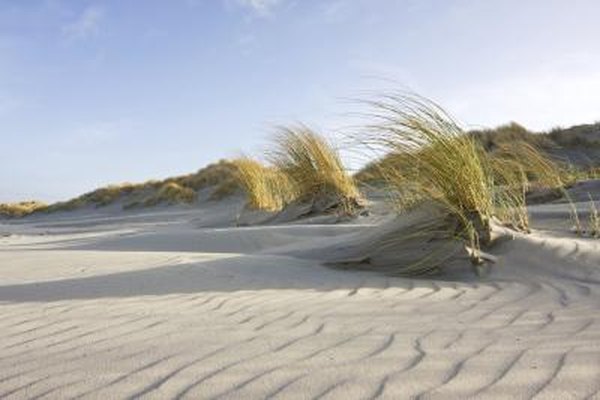
Deposition creates many types of landforms on earth. Gravity and weight create rockslides on the sides of hills and mountains, depositing rocks at the bottom. Wind's efforts create patterns in the sand dunes of the desert as it moves the sand across the surface. Rivers create deltas when they deposit sand and sediment at their mouths, where the water slows to meet the ocean. Ocean waves create beaches and sand bars as they deposit sand over time.
Egyptians and Deposition
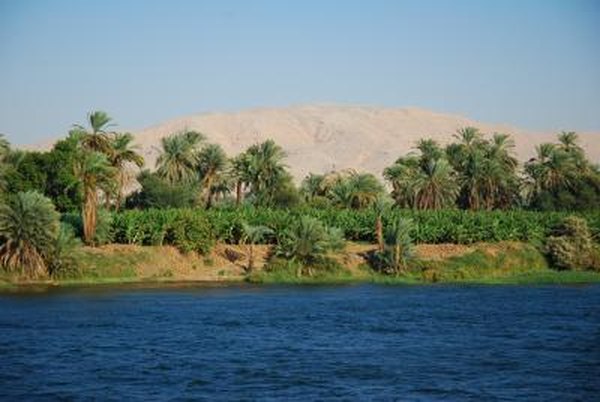
The action of the Nile river in ancient Egypt provides one of the best examples of how deposition can positively affect human society. Each year the Nile river flooded, it deposited silt upon the lands closest to its banks. Because of this fertile soil, the farmland could produce bountiful crops. In this way, the process of deposition was important to the growing ancient Egyptian civilization.