
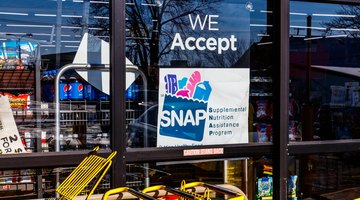


One of the largest food subsidy programs in the U.S. is food stamps. According to Cato Institute the U.S. Department of Agriculture's budget largely consists of this program. In 2009, taxpayers paid $56 billion towards the food stamp program, up from $18 billion in 2000.
History
The Food Stamp Act of 1977 was an act intended to provide better nutrition for low-income families. A June 2010 article on the Boston Globe website noted that in March 2010, the unemployment rate was at a 26-year high. More than 40 million Americans--one in eight--received benefits
According to the Food Research and Action Center (FRAC), in 2008 the new official name for the food stamp program became SNAP, the Supplemental Nutrition Assistance Program. SNAP is currently implemented in all 50 U.S. states.
Function
When food stamps were first introduced, they were in the form of paper stamps. FRAC explains the system today stating they are in the form of electronic benefit transfer (EBT) systems, much like a bank card. You swipe your card and the "stamps" are deducted from your account. Because everything is done electronically the Food Stamp Program is able to respond immediately to any local, state, or national economic emergencies or natural disasters.
Budget
According to the Center on Budget and Policy Priorities, in 2010, safety-net programs consumed 14 percent of the U.S. national budget, totaling $482 billion. These programs include Supplemental Security Income for the elderly or disabled poor and unemployment insurance, school meals, low-income housing assistance, child-care assistance and food stamps.
Funding
FRAC explains that the government funds 100 percent of the money needed for SNAP, so there is no out-of-pocket expense for the beneficiaries. Cato Institute wrote the USDA, funds nearly 50 percent and state governments fund the rest.
The federal taxpayers pay for the benefit costs. The administration costs, totaling about $5.5 billion per year, are split between the state and local taxpayers. The administration costs cover the meetings and phone calls made to the more than 28 million recipients and the keeping of records of each recipient's personal data.
Fraud
Each year hundreds of thousands of dollars in food stamps are spent on ineligible items and fraudulant encounters with businesses. For example, Rafeal Sanchez of the Indy Channel found that at a Best Price Dollar store in Indiana a clerk allowed a customer to use his EBT card, but told him he was going to charge him an extra fee. He bought potato chips, diapers, cigarettes and toilet paper, which are not eligible food-stamp items. The customer was charged $17.68 for a bill that should have only been $12.98.
Related Articles







References
Writer Bio
From her hometown of Cattaraugus, N.Y., Stephanie Hacker has been writing for publications since 2008. Her articles have appeared in the "Ellicottville Villager" newspaper and "KIWI" magazine. Hacker holds a Bachelors of Arts in journalism and mass communications from St. Bonaventure Univeristy.