Things You'll Need
150-grit sandpaper
Orbital sander
Sanding block
Paintbrush
Chemical stripper
Plastic paint scraper
Rags or paper towels
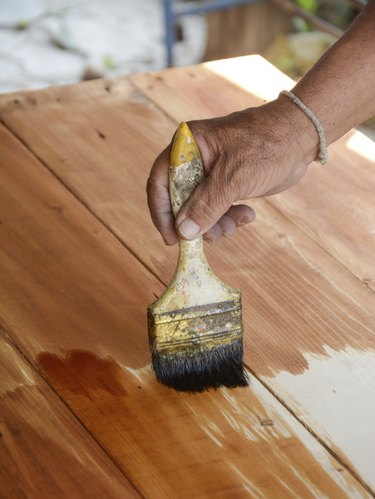
Upcycling an old item -- such as wood -- may first require removing the polyurethane coating. This coating, or finish, is applied as a final step to ensure the surface is sealed and lasts for many years. When you're trying to renew the look of the piece, however, the polyurethane can get in the way. Thankfully, you can remove the polyurethane by either sanding it off or applying a commercially available chemical stripper.
Sanding
Step 1
Attach a piece of 150-grit sandpaper to the orbital sander.
Video of the Day
Step 2
Start at one end of the flat surface and sand lightly with the orbital sander to remove the polyurethane. Make sure to sand following the grain of the wood.
Step 3
Sand curved or irregular areas with a sanding block or by manually rubbing a piece of sandpaper over the area.
Chemical Remover
Step 1
Clean the surface you are removing the polyurethane from and let dry before beginning.
Step 2
Dip a clean paintbrush into the chemical remover. Let excessive remover drip off the brush and back into the can.
Step 3
Paint the chemical remover liberally over the surface. Try to brush in the same direction and avoid brushing in a back-and-forth motion.
Step 4
Allow the chemical remover to sit on the surface for at least 20 minutes. This is just an example of the length required for the chemical stripper to do its job. Each brand of stripper will have its own time frame that you should follow for best results.
Step 5
Scrape the chemical remover and the softened polyurethane off the surface with a plastic paint scraper. Wipe the scraper clean with a rag or paper towels after each pass. Continue in this manner until you have removed the polyurethane.
Step 6
Wipe any excessive chemical remover off the surface with a clean rag or paper towel. Clean the area where the polyurethane was removed with water.
Warning
Always following the warnings and directions when using power tools or chemical strippers.
Wear proper safety gear -- such as gloves, safety goggles and dust mask -- when working with chemicals and power tools.
Chemical strippers produce unpleasant and potentially harmful fumes. That is why it is important to use these products only in a well-ventilated area.
Video of the Day