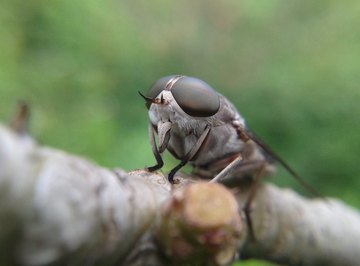
Female horseflies require blood during summer's mating season, which is why they bite people too. In the summer, most people wear less clothing, opting to go shirtless or wear sleeveless shirts with their shorts, exposing a lot of skin for the pesky horse fly. Horse flies belong to the insect family called Tabanidae, which is comprised of about 4,450 blood-sucking species worldwide and 400 in the United States alone. A horse fly bite is hard to miss because it hurts the moment you receive a bite. The females have sharp scissor-like parts in their mouths that cut your skin to get at the blood.
What a Horse Fly Looks Like
Horse flies are easy to spot because they look just like a house fly – only they are much bigger. Horse flies have brown to black bodies and can have clear or colored wings with bright green or black eyes. They can be anywhere from 3/4 of an inch to 1 1/4 inches long. Female horse flies typically bite horses and cattle, but as opportunists, they can take their sustenance from people too. The flies are active during the day, and movement, warmth, shiny surfaces and exhaled carbon dioxide draw the fly's attention. Males feed only on nectar and do not suck blood.
Horse Fly Lifespan
Both male and female horse flies emerge from their pupal stage in late spring to summer. After mating in the summer, females require blood to develop the eggs, laid in a single mass of between 100 to 800 eggs or more on the underside of leaves or on plant stems. The larvae phase of the horse fly can last over the winter with between six to 13 stages before it turns into a pupa. The pupae stage generally lasts from one to three weeks. The female seeks out moist environments in which to lay their eggs near beach dunes, waterfalls, marshes, ponds and alongside creeks. Once the eggs hatch, the larvae eat small minnows or frogs and even small invertebrates. Horse flies live between 30 to 60 days, long enough to eat, breed and die.
Bites, Swelling and Care
The bite of a horse fly hurts immediately, because the horse fly slices open the skin with its blade-like mouth parts to allow blood to pool on the skin's surface. Some people have an allergic reaction to the secretions released by the horse fly during feeding, but generally, the swelling and pain from the bite usually go away in a couple of days when using a first-aid type cream. If you experience swelling, hives or have trouble breathing after a horse fly bite, seek emergency medical care immediately. If you scratch the bite, you can get a secondary infection, which may also require treatment.
References
About the Author
As a journalist and editor for several years, Laurie Brenner has covered many topics in her writings, but science is one of her first loves. Her stint as Manager of the California State Mining and Mineral Museum in California's gold country served to deepen her interest in science which she now fulfills by writing for online science websites. Brenner is also a published sci-fi author. She graduated from San Diego's Coleman College in 1972.