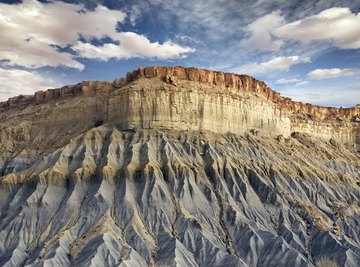
Soil erosion is the weathering away of topsoil caused by water, wind or tillage. Pesticides and other chemicals can get trapped in soil, polluting streams and rivers as the soil breaks apart. Soil erosion can also lead to mudslides and floods, negatively affecting the structural integrity of buildings and roadways. Over time, abusive farming and agricultural tilling processes can result in nutrient degradation -- the decline in soil quality. This type of erosion depletes organic matter in soil, making it less suitable for planting and harvesting crops or for the natural production of vegetation.
Pollution and Poor Water Quality
The gradual erosion of soil creates sedimentation, a process by which rocks and minerals in the soil separate from the soil and deposit elsewhere, often lodging in streams and rivers. Pollutants in the soil, such as fertilizers and pest control agents used to protect crops, also settle in the streams and rivers. Water pollutants result in poor water quality -- including the quality of drinking water if the pollutants aren't removed before consumption.
Sedimentation also leads to the excessive growth of algae, as sunlight can get through the sediment. High levels of algae remove too much oxygen from the water, resulting in the death of aquatic animals and reduced fish populations, according to the World Wildlife Fund.
Mudslides and Structural Problems
Soil erosion leads to mudslides, which affect the stability and structural integrity of buildings and roadways. Mudslides not only affect structures supported by the soil but also buildings and roads that are in the path of slides. Mudslides occur when fine sand, clay, silt, organic matter and soil spill off the sides of hills and slopes as a result of the force and energy of heavy rainfall. This runoff occurs quickly, so there's not enough time for the surface to reabsorb or trap the eroding soil, according to Envirothon, a program of the National Conservation Foundation and North America's largest high school environmental education competition.
Deforestation and Flooding
Deforestation -- the removal of trees to create room for cities and farming -- erodes soil. Trees help hold soil in place, so when they're uprooted, winds and rains push the loose soil and rocks to streams and rivers, again resulting in unwanted sedimentation. The heavy layers of sediment keep streams and rivers from flowing smoothly, eventually leading to flooding. Excess water, especially during rainy seasons and when the snow melts, gets trapped by the sediment and has nowhere to go except back on land.
Soil Degradation
The degradation of nutrients in soil is often a result of poorly conducted farming and agricultural practices that lead to soil erosion. Excessive irrigation and outdated tilling practices reduce the amount of nutrients in the soil and make it less fertile for natural vegetation and agricultural purposes. According to the Environmental Protection Agency, agricultural methods, such as purposely leaving organic matter in the soil and ensuring that at least 30 percent of the previous year's crop residue remain in the soil, increase the fertility and vitality of the soil. In some cases, seeds can be planted directly in the previous year's crop residue without any further tillage.
References
- World Wildlife Fund: Soil Erosion and Degradation
- Envirothon: Soil Erosion Causes and Effects
- Plant & Soil Sciences eLibrary: Erosion
- United States Environmental Protection Agency: Soil Preparation
- Iowa State University: Soil Erosion -- An Agricultural Production Challenge
- Thomson Reuters Foundation: Erosion a Huge Contributor to Flood Disasters
About the Author
As curriculum developer and educator, Kristine Tucker has enjoyed the plethora of English assignments she's read (and graded!) over the years. Her experiences as vice-president of an energy consulting firm have given her the opportunity to explore business writing and HR. Tucker has a BA and holds Ohio teaching credentials.