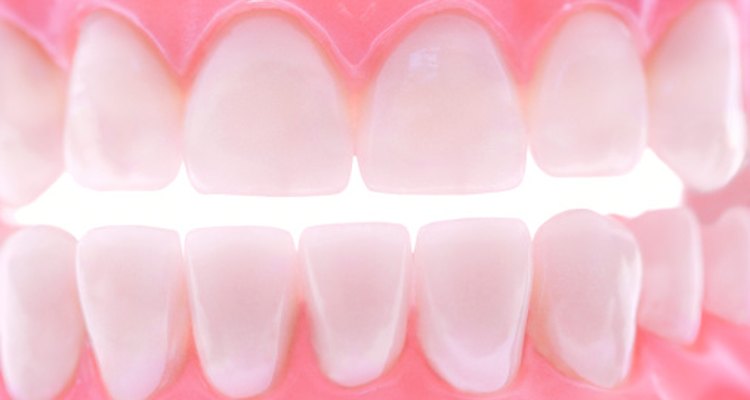
Employ techniques to soften plaque in your daily oral hygiene routine. Softening plaque allows you to remove it from your teeth so you won't have to visit the dentist for a major cleaning. Plaque forms upon food consumption, particularly when eating foods high in starch or sugar. This bacteria forms as a fuzzy, off-white film on your teeth and can harden into tartar, which causes tooth decay and gum disease such as gingivitis. Take daily measures to avoid plaque buildup for improved oral benefits and a healthy smile.
Place a disclosing tablet in your mouth and chew on it. Move the tablet around your mouth so it reaches the front, back and sides of your teeth. Spit the tablet and excess saliva out. Disclosing tablets contain vegetable dye that stains the plaque on your teeth bright red. Look in the mirror to find any dyed plaque.
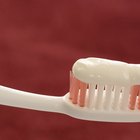
Brush the dyed areas with a soft-bristle toothbrush and tartar-control toothpaste for 2 to 3 minutes. Move the bristles in a circular motion and in a fast, back-and-forth motion over the dyed areas to soften and loosen plaque.
Floss with dental floss. Slide the floss back and forth between your teeth and down toward your gums to soften and remove plaque. Rinse your mouth with a mouthwash that protects against plaque buildup.
Continue the teeth brushing, flossing and mouth rinsing routine at least two times a day and after meals to consistently soften plaque and prevent buildup.
Related Articles
Will Cream of Tartar Whiten Teeth?
How to Use Opalescence 35

How to Remove Braces With Lemon

How to Clean Teeth With Cream of Tartar
How to Make Xylitol Toothpaste
How to Repair Open Pores
How to Clean Stains From False Teeth
The Best Ways to Remove Nicotine Stains ...

How to Soak Your Feet in Mouthwash
How to Remove Dark Stains on Teeth
Foods With Calcium Phosphate

How to Dissolve Denture Adhesive

Can Age Spots Be Reversed?

How to Make Homemade Lotion With ...

Papaya & Acne
How to Get Stains From Under Your ...

How to Reduce Facial Redness From ...
How to Clean Extracted Teeth
Ingredients in Hand Soap
Pronamel Toothpaste Ingredients
References
Writer Bio
Taylor DiVico is a professional songwriter, content writer, fiction novelist and poet with more than 15 years of experience. DiVico holds a B.A. in philosophy from the University of Rhode Island and an M.S. from Syracuse University.
Photo Credits
Thinkstock/Comstock/Getty Images