
While the oil fields of Alaska may provide oil companies in the United States with a highly sought-after and highly profitable resource, drilling for that resource has several disadvantages. Oil drilling in Alaska has already had severe impacts on the ocean, landscape and local wildlife, and the ongoing motivation of oil companies to tap and exploit oil deposits means that problems could continue to grow.
Pollution
According to the U.S. Fish and Wildlife Service’s Arctic National Wildlife Refuge, the machinery and equipment that workers use for drilling oil release an array of harmful air pollutants, including methane, particulate matter and nitrogen oxides. These pollutants can form a haze, or smog, in the air and contribute to the formation of acid rain.
In addition, oil spills, both on land and on water, can have horrific effects on Alaska’s soil conditions and aquatic ecosystems, as the Valdez crisis demonstrated. In 1989, the Exxon Valdez oil tanker, leaving out of Valdez, Alaska on its way to Los Angeles, spilled nearly 11 million gallons of oil into Prince William Sound. As the environmental resource website The Daily Green notes, today, you can still find oil on the beaches in the area.
Landscape Concerns
In addition to polluting the landscape, drilling oil in Alaska disrupts its natural aesthetic qualities. Drilling requires that workers set up an entire infrastructure on the land, which means clearing spaces for roads, habitations, loading docks, equipment, landfills, landing strips for planes and helicopters, and pipe-lines, such as the 800-mile Trans-Alaska Pipeline System. According to the Arctic National Wildlife Refuge, one oil-drilling encampment in northern Alaska is nearly 100 miles across.
Animal Impacts
There are several native species in Alaska that suffer, or could potentially suffer, from the effects of oil drilling. These include caribou, musk oxen, porcupines, ravens, gulls, arctic foxes, wolves, snow geese, shorebirds and seabirds, and polar bears. As the Arctic National Wildlife Refuge mentions, in addition to pollution contributing to animal issues, the seismic vibrations that workers generate to locate oil deposits can cause problems. These vibrations scare animals, such as polar bears, off their natural migration patterns.
Plant Impacts
Oil drilling in Alaska can have disadvantages for plant life. Seismic vibrations can disrupt plants' growth patterns. In addition, the infrastructure from oil drilling can cause drainage issues for plants. Infrastructure, particularly road-building, can also lead to alkaline dust spreading across and settling on topsoil. This dust can have negative impacts on plant development and overall health.
References
About the Author
Erik Devaney is a writing professional specializing in health and science topics. His work has been featured on various websites. Devaney attended McGill University, where he earned a Bachelor of Arts in humanistic studies.
Photo Credits
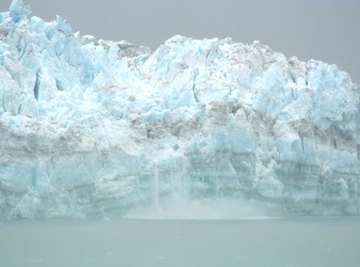
Hubbard Glacier, Alaska image by mustlovedolphins from Fotolia.com