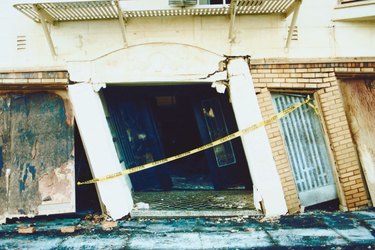
Earthquakes cannot be predicted and can occur at any time. Their seismic waves can create major damage at the epicenter and the rippling effects can wreak havoc many miles away. Changes have been made to some buildings on the basis of research and accumulated knowledge of past earthquakes, resulting in buildings that are better able to withstand an earthquake. Two-story apartment buildings may be safe if they were built to current safety standards, or they may be dangerous if they are located over a "soft story" such as a parking area and have not been retrofitted. The best way to endure an earthquake safely is to be prepared and follow earthquake safety tips.
Preparing an Emergency Kit
Video of the Day
An emergency kit is vital if you are trapped and cannot escape the building because the stairwells are blocked due to damage. Have an emergency kit prepared with enough supplies to last at least three days. Your emergency kit should include a first aid kit, sturdy shoes, bottled water enough for one gallon of water each day for each person, and emergency telephone numbers including hospitals, ambulance, police and fire. Keep canned foods and a manual can opener, packaged prepared foods, and keep special dietary requirements in mind for infants, diabetics or other needs. An emergency supply of prescription medicine should be available for anyone with a chronic illness such as asthma or other conditions. A portable radio or a wind-up radio, emergency cash, a flashlight, extra batteries, blankets and a fire extinguisher are necessary for your safety and to listen for emergency instructions.
Video of the Day
Safety During the Earthquake
When an earthquake happens, do not attempt to escape the two-story building, even if you only have a short distance to go; chances are you will be injured. Immediately drop underneath a table or desk, cover your eyes with your arm and hold on with the other hand. If a table is not available, stand in a doorway; the frame will protect you, according to the Center for Earthquake Research and Information. If you are in bed when the shaking occurs, cover your head with a pillow and stay there, unless there is a heavy light fixture on the ceiling or large pictures with glass in the frames on the wall above you that can injure you.
Escape Routes
If a fire alarm sounds, leave the building as soon as the shaking stops, but use caution and common sense to protect yourself from debris that could continue to fall with the aftershocks. Do not use an elevator, and if you hear people trapped inside, notify emergency personnel. Take the nearest stairway to exit the building, but hold on to the railing securely, as aftershocks probably will occur. Though the aftershocks won't be as harsh as the first quake, they can cause further destruction of the building and injuries. Do not return to the building until the proper authorities tell you it is safe.
Soft-Story Buildings
Many older apartment buildings, and some homes on hillsides, were build with soft-story construction where the living space is located over a storage space or parking area, with posts supporting the living area. These buildings can be extremely dangerous in an earthquake as the living area can collapse. To be safe, this type of building should be retrofitted by a qualified professional such as an engineer or architect to give it additional support so it can handle an earthquake.