hichako/iStock/GettyImages
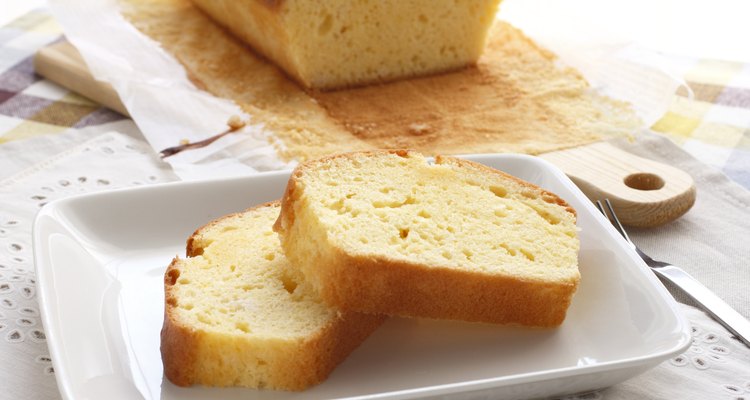
The type of flour you use determines several of the most critical qualities of a pound cake. Cake flour, all-purpose flour and self-rising flour are all suitable choices for baking cakes, and but the three products differ in three key ways: Particle size, protein content and additional ingredients. Those differences will affect the texture and rise of your pound cake.
Cake Flour
Cake flour is manufactured specifically for baking cakes. It is milled more than other flours to create extra-fine particles, which yield baked goods with a finer, smoother texture. Its protein content is comparatively low, creating a more tender, less chewy consistency. Cake flour is your best choice if you want a light pound cake that rises a lot.
All-Purpose and Self-Rising Flours
All-purpose flour is not milled as much as cake flour and contains an average amount of protein -- more protein than cake flour. It is a better choice if you prefer a denser pound cake. Self-rising flour is essentially the same as all-purpose flour in terms of texture and protein content. It may have been milled a little more for a slightly softer texture, but it is never milled as much as cake flour. Self-rising flour stands apart because it contains additional ingredients: salt and baking powder. If you choose this product, eliminate the salt and baking powder from your recipe.
Related Articles
Bread Flour vs. Cake Flour in Sponge ...
What Is the Difference Between Cake ...

What Kind of Flour to Use for Cupcakes?
Does Cake Flour Contain Baking Soda & ...
How to Substitute Cornstarch for ...
What Kind of Oil Do You Use in Brownie ...

Is Unbleached Flour the Same as ...
Can You Substitute Whole-Wheat Pastry ...
Can You Substitute Yogurt for ...

How to Make Pumpernickel Flour
Can I Substitute Bleached for ...

Does Unbleached Bread Flour Make ...
Differences Between Bleached Flour & ...
How to Replace Flour With Oat Flour
What Are the Functions of Flour in ...
Should Cake Flour Be Sifted Before ...
Can I Use Vanilla Buttercream Frosting ...

Psyllium Husk & Gluten
Do You Use Granulated or Powdered Sugar ...
Baking With Almond, Rice & Coconut Flour
References
- Joy of Cooking; Irma Rombauer, Marion Rombauer Becker and Ethan Becker
- Fine Cooking: Choosing Flour for Baking
Writer Bio
Lamar Grey has been writing about cooking and food culture since 2010. He has ghostwritten eight cookbooks. Grey entered the culinary industry in 2003 as a prep cook in a full-service restaurant. He subsequently served as a baker and head cook on three award-winning kitchen staffs.