

It can be difficult to engage kids while studying ancient history, but Mesopotamia, also known as the “cradle of civilization” has many interesting elements that allow for hands-on lessons. Whether studying the ancient writing of “cuneiform,” reconstructing ancient clay artifacts, designing Mesopotamian homes or investigating the jewelry and clothing worn by the people of Ancient Mesopotamia there are plenty of interesting activities for kids.
Writing
In Ancient Mesopotamia students wrote on clay tablets with a form of writing called “cuneiform.” Using pencils, self-hardening clay and examples of cuneiform writing, students can write just like kids in Mesopotamian schools did. Cover desks with paper and put a clay “tablet” on each desk, along with a laminated sheet of cuneiform writing. Instruct students to create their own message, reminding them that the people of Mesopotamia wrote in columns that went right to left across the table and from the top down. When done, set the tablets on a paper-covered table and let dry overnight.
Artifacts
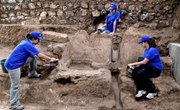
Archeologists who study Ancient Mesopotamia have learned a great deal from the pottery that has been unearthed. When a piece is found, the archeologist will often make a detailed drawing of the find so it can be used for future study. They will then try and deduce as much information as possible from that piece of pottery. If multiple pieces are found, they will often try to reconstruct the pot. In this lesson, students will play archeologists and make drawings as well as do reconstruction of found pieces of pottery. Put students into groups of three or four and give them a broken flower pot, jug or plate, a tape measure, masking tape and strong glue. The goal of each group is to reconstruct the pieces as accurately as they can, checking with the other groups for any missing pieces. Once they’ve rebuilt the piece of pottery, they must draw a picture of it and write an accurate a description of it. They then must hypothesize what the piece of pottery might have been used for in Ancient Mesopotamia.
Architecture
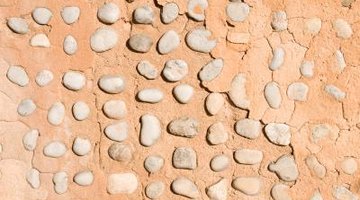
In this lesson, students will learn about the typical Mesopotamian home. Generally single story, constructed of mud and brick with brick or earthen floors, they often were built around an open-air courtyard. Students will study reference materials that show pictures of what a home in Ancient Mesopotamia would look like. They will be required to make notes about all the features they notice, including those mentioned above. Then, pair the students into groups and give them the materials (modeling clay, small twigs and dried grass, pebbles to use for bricks) to construct their own Mesopotamian home. Working together, the group must first draw a design for their home on paper and then construct it out of clay.
Clothing and Jewelry
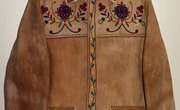
Students in this lesson will study the clothing and jewelry worn by the people of Ancient Mesopotamia. Break the students into groups and provide them with a list of resources on clothing and jewelry worn in Ancient Mesopotamia. The first group to write an item such as sandals on the board claims it. That group will then report on the type of sandals worn by the people of Ancient Mesopotamia. They will then research all the related information, such as: How were they constructed? Were they worn by everyone or only certain classes? What were they made of? What did they look like? Each group will put their findings on a poster board to share with the rest of the class.
Related Articles





References
Writer Bio
Andre Zollars started writing in 1999, when she worked in the editorial department at "The Missoulian." She has been published in "Endovascular Today," "High Country Angler," "Outside Bozeman" and "Western Ag Reporter." She also has written for online magazines New West, Hunting and Fishing USA. Zollars holds a Bachelor of Arts in international studies from the University of Washington.