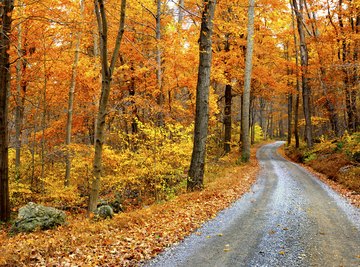
The deciduous forest is one of the most populated biomes in the world. It covers Europe and Japan, and is found in the eastern parts of the United States, Canada and China. Deciduous forests are characterized by plentiful rainfall, rich soil, and large temperature changes between the summer and winter months. These conditions allow deciduous forests to support a wide variety of plant and animal life.
Deciduous Trees
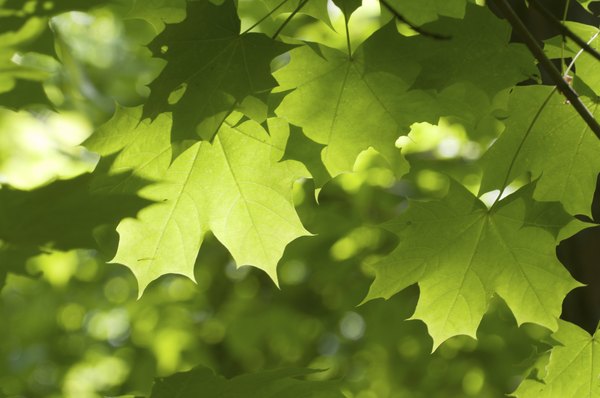
The deciduous forest biome gets its name from its most visible form of plant life, the deciduous tree. Deciduous trees, such as maples, oaks and beeches, lose their leaves during fall and winter, and regrow them during spring. These trees turn deciduous forests red, orange and yellow during autumn as leaves prepare to fall. Trees provide a home for other plants in the deciduous forest. Climbing vines such as poison ivy use tree trunks as support, and lichens and mosses grow on trees' outer bark.
Shrubs and Wildflowers
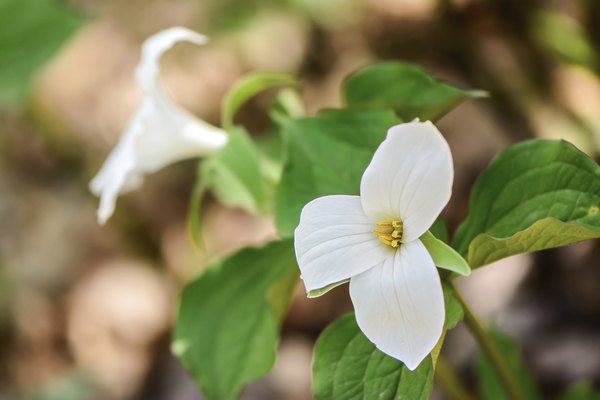
Underneath the trees, plants in the deciduous forest are divided into several layers of growth. The first is the shrub layer, in which bushes and shrubs such as azaleas, holly and rhododendron grow. Shrubs often are deciduous as well, and will lose their leaves during winter. Below the shrub layer grows the herb layer, in which wildflowers such as bluebells, trillium and Dutchman's breeches grow – typically in early spring, before trees have all their leaves. Finally, lichens, fungi and mosses grow on the ground layer of the forest, taking in nutrients from the wet soil.
Mammals and Birds
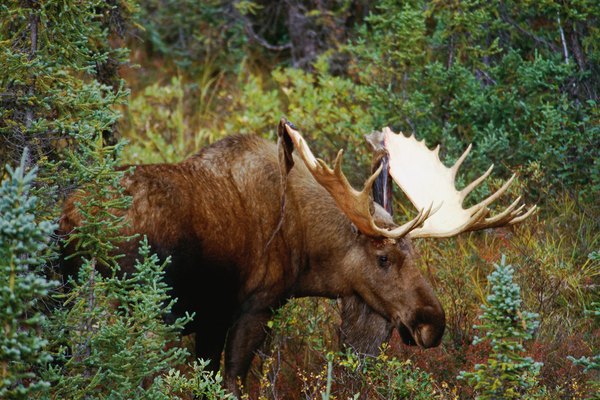
The few large predators in the deciduous forest include timber wolves, bears, mountain lions and bobcats. Deer and moose are the largest herbivorous mammals in the deciduous forest, but smaller herbivores such as squirrels, chipmunks and rabbits are also common, as well as omnivorous raccoons, skunks and possums. The hollows and branches of trees provide a habitat for many bird species, which feed on the trees seeds. Jays, woodpeckers and robins are common in the biome. Because of the biome's cold winters, many bird species migrate south for the season.
Reptiles, Amphibians and Insects
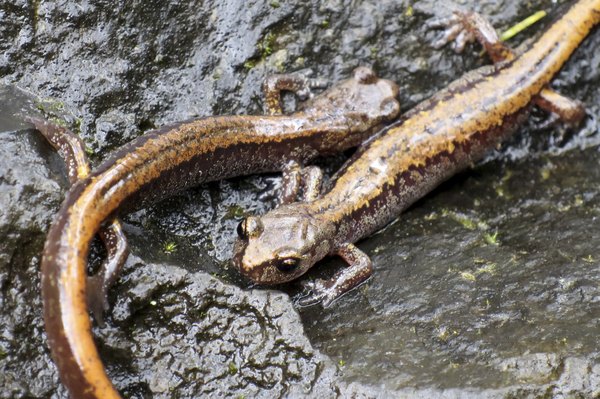
The relatively warm temperatures and wet climate of deciduous forest makes it an excellent habitat for many reptile and amphibian species that cannot live in colder biomes. Toads, wood frogs and salamanders live on the forest floor, many camouflaged to imitate the dead, decaying leaves that coat the ground. Reptiles such as box turtles and rat snakes are present. A wide variety of insects also live in the deciduous forest; the tree leaves provide food for the caterpillars of moths and butterflies, and their wood a home for termites and carpenter bees. Katydids and walking sticks blend themselves in with the foliage, and cicadas spend long periods of their lives burrowed underground, feeding on roots of plants.
References
About the Author
Jon Zamboni began writing professionally in 2010. He has previously written for The Spiritual Herald, an urban health care and religious issues newspaper based in New York City, and online music magazine eBurban. Zamboni has a Bachelor of Arts in religious studies from Wesleyan University.