
Hydrogen is the smallest and most basic element on the periodic table. This element is one of the key components of water, a substance that is vital to life and used for a variety of purposes. Additionally, hydrogen is used for a variety of purposes and within a variety of products for everything ranging from fuel to disinfecting to the creation of a variety of useful products found around the home.
Lifting
Hydrogen is very light, since hydrogen is the smallest element on the periodic table of elements. According to schoolforchampions.com, putting hydrogen within a contained space such as a balloon can help act as a lifting agent. However, helium is usually what is used as a lifting agent, because helium is not flammable as is hydrogen.
Fuel
Hydrogen is used for fuel in a variety of circumstances. Hydrogen makes excellent fuel for rockets because of its flammability. According to schoolforchampions.com, hydrogen has the potential of being a very clean source of fuel, since the hydrogen produces only water as an emission. However, pure hydrogen is very hard to find and can be very expensive to use. While hydrogen is flammable, it is not very much more flammable than gasoline. Scientists are working to find a way to use hydrogen to create thermonuclear energy, which would be a much more efficient form of energy than currently used forms.
Chemicals
A variety of important chemicals use hydrogen, according to schoolforchampions.com. Acids and bases have hydrogen within them. Hydrogen gas breaks down petroleum products. Hydrogen is used to create the ammonium found in fertilizer. Hydrogen is used to prepare all kinds of foods and fats. Hydrogen is also used to make methyl alcohol, which is found in paints, varnishes, inks, cements and paint strippers.
Welding
Oxyhydrogen torches, which are used heavily in welding, are powered by a powerful reaction between hydrogen and oxygen, according to scienceencyclopedia.com. By feeding these gases gradually together, a very hot torch is created that can be used to melt steel.
Metals
Hydrogen is used to extract metal from ores, according to scienceencyclopedia.com. One of the metals extracted is tungsten, which is used in electric light filaments. Tungsten oxide is converted into tungsten and water by combining it with hydrogen.
Hydrogen Peroxide
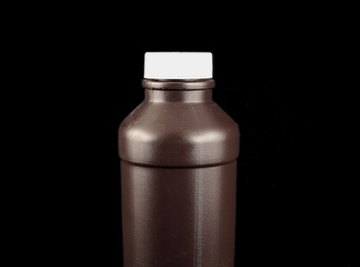
Hydrogen peroxide is a chemical compound used for a variety of purposes, such as for disinfecting. According to using-hydrogen-peroxide.com, hydrogen peroxide can be used to improve dental health by gargling it and pouring it over your toothbrush and dentures. It can be used for cleaning out infected cuts and for disinfecting contact lenses. Hydrogen peroxide is also useful for cleaning and removing mold.
References
About the Author
Charles Pearson has written as a freelancer since 2009. He has a B.S. in literature from Purdue University Calumet and is currently working on his M.A. He has written the ebooks "Karate You Can Teach Your Kids," "Macadamia Growing Handout" and "The Raw Food Diet."
Photo Credits
brown bottle image by Jim Mills from Fotolia.com