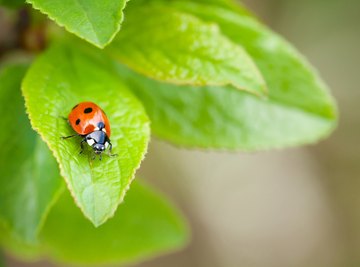
Organic gardeners purchase thousands of ladybugs – inexpensively – and release them in their gardens as a form of natural pest control. Whether you call them ladybugs, ladybirds or lady beetles, most of them only eat aphids and sap feeders. In the early stages of their lives, ladybugs require water to survive. As they grow, the water source comes from eating insect larvae. Ladybugs can live in a variety of places and climates but must find shelter during cold weather.
TL;DR (Too Long; Didn't Read)
Some of the insects ladybugs eat include aphids, whiteflies, leaf beetle larvae, spider mites, scale insects, some insect eggs and small caterpillars. They also feed on pollen, nectar and honeydew. To attract ladybugs to the garden, add flowering plants in the spring that produce nectar and pollen to help feed them until the insects they eat grow and reproduce. Asian ladybugs have a nasty bite that is not venomous but it does hurt.
Killer Ladybugs
Make no mistake, ladybugs kill. They are predators that eat other insects, mainly aphids, most of which are pests to crops and plants. As a voracious eater, ladybugs must eat many aphids to lay eggs, up to 5,000 in its lifetime. As the gardener's best friend, ladybugs represent a natural extermination for harmful insects. While nearly all ladybugs eat insect, some, such as the Mexican bean beetle and squash beetle have orange bodies, compared with red, and black spots on their wing covers.
Ladybugs Live Everywhere
Ladybugs mainly live in shrubs, trees, fields, gardens and sometimes in homes. They often lay their eggs near a colony of aphids, as that is there main source of food. Found all over the world, ladybugs flourish in places where their food sources thrive. Because they get water from the moisture in the larvae they eat, they do not need to be near traditional sources of water.
Shelter in the Cold
Although ladybugs can be found in nearly all parts of the planet, in a wide range of climatic conditions, they prefer shelter and hibernate when the weather begins to turn colder. Ladybugs make their homes in the cracks of trees or on wood of homes. Sometimes, they bury themselves in ground cover. When temperatures get below 55 degrees F, the ladybug is not able to fly, limiting its food sources.
Most Any Climate
Other than in the climates, in and around the Arctic or Antarctic, ladybugs prosper throughout the world. In the coldest climates, the insect population is smaller, limiting ladybugs' food sources. Where areas with short warm seasons, the ladybug shelters itself and hibernates longer, but in more temperate climates, the ladybug continues eating and laying eggs more readily.
Predator Threats
With a distinctive protective system, ladybugs exude a foul-tasting liquid that keeps most birds and other predators away. The beetle often plays dead when threatened, pulling in its legs and appearing lifeless. But some predators are not fooled. Toads, spiders and the stinkbug, for example, are repulsed or fooled by the ladybug’s death antics.
References
About the Author
David W. Berner is an award-winning journalist, writer and broadcaster. HIs memoir, "Accidental Lessons," was released in February 2009. His audio documentary, "Pebble Beach Stories," celebrates the ties between golfers and famed California golf links. Berner has covered stories as diverse as the 2008 presidential election to coyote sightings in Chicago's Lincoln Park.