How to Replace My Sonicare Toothbrush
Unlike traditional toothbrushes that end up in the trash after several months of use, electric toothbrushes only require you to discard the toothbrush heads. If you have a Sonicare toothbrush, it is important to note the manufacturer, Koninklijke Philips Electronics, recommends replacing the toothbrush heads every three months 1. While removal and replacement of the heads is far from challenging, it is important that you purchase the correct toothbrush head for your particular model.
Identify your Sonicare toothbrush model before purchasing a new brush head 1. Your Sonicare model name (ProResults, HydroClean or E-series) exists in the owner’s manual and on the original box 2. Some Sonicare models have the model name printed on the toothbrush handle or under the charger.
How to Sanitize an Electric Toothbrush
Learn More
Remove the Sonicare toothbrush from its charger. Hold the Sonicare toothbrush in one hand and the brush head in your other 1.
Pull gently on the toothbrush head. Continue pulling until the toothbrush head separates from the electric handle.
How to Clean a Toothbrush
Learn More
Discard the toothbrush head in your wastebasket. Remove the new Sonicare toothbrush head from its packaging.
Hold the toothbrush head over the Sonicare handle and align the bristles so they face the front of the unit. Slide the toothbrush head over the metal shaft.
Grip the Sonicare handle firmly and press down on the toothbrush head. Continue pressing downward on the toothbrush head until you hear it snap into place.
Tips
Pharmacies, grocery stores, department stores and online retailers sell Sonicare products and accessories.
Warnings
Keep in mind the Sonicare toothbrush heads are not interchangeable. For instance, E-series heads do not fit FlexCare and ProResults toothbrush handles. E-series toothbrush heads fit Xtreme, Elite and Essence models. ProResults brush heads fit the FlexCare Sonicare toothbrush models and the HealthyWhite models.
Related Articles
How to Sanitize an Electric Toothbrush
Learn More
How to Clean a Toothbrush
Learn More

How to Clean Clear Retainers
Learn More
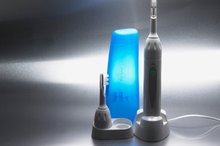
How to Reset a Sonicare
Learn More

How to Fix a NordicTrack Ski Machine
Learn More
How Can I Tell If My Heart Rate Monitor Needs a New Battery?
Learn More
How to Glue Broken Dentures
Learn More

How to Calculate Body Fat Into Pounds
Learn More
How to Get Rid of Mold on an Electric Toothbrush
Learn More
How to Use a Walgreens Digital Thermometer
Learn More
References
- Sonicare: HealthyWhite 700 Series
- American Dental Association. Shopping list of all products with the ADA Seal of Acceptance.
- American Dental Association. Toothbrushes. 2020.
Resources
Writer Bio
Jonae Fredericks started writing in 2007. She also has a background as a licensed cosmetologist and certified skin-care specialist. Jonae Fredericks is a certified paraeducator, presently working in the public education system.