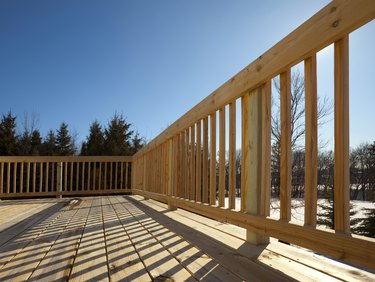
Cypress contains cypressene oil, which is a natural preservative that imparts cypress with resistance to decay. Cypress readily accepts stains and paints, but it can also be left in its natural state. While some believe that the naturally-aged appearance of untreated cypress is the most appealing, others contend that regular cleaning and sealing is the best option.
Interior and Exterior
Video of the Day
Cypress can be used anywhere other types of wood are used. Interior trim is an example as are stained cypress cabinets. However, because of it's weather-resistant quality, a majority of cypress is used for exterior decking, siding, fencing and structural members, such as beams and posts.
Video of the Day
Cleaning Interior Cypress
Interior cypress is typically finished with a top coat of lacquer or varnish. Clean it with a mild soap and water solution just as you would any other finished wood. Follow up by buffing it with furniture polish.
Cleaning Exterior Cypress Wood Paneling
Exterior cypress presents discoloration, mildew and stains, that are not typically associated with interior applications. Discoloration is common around fasteners used on exterior cypress. Also known as extractive bleed, it's more common on vertical surfaces, such as cypress wood paneling, when water washes black streaks down from screws or nails. Basic cypress siding maintenance requires you to regularly scrub off black marks with soap and water using a natural-bristle brush.
Natural mineral stains on cypress are often blue in color, typically caused from iron in the wood. Lighten mineral stains by dissolving 1 to 4-ounces of oxalic acid in 1 quart of hot water. Scrub the stained area with a stiff-bristle brush. Rinse thoroughly with water after scrubbing.
It is worth noting that oxalic acid is one of the strongest cleaning agents and is toxic. Wear breathing and eye protection and rubber gloves. Don't expose plants or vegetation to oxalic acid.
Mildew and Mold
Mildew and mold are basically the same thing, and may create black spots, blotches or streaks, or may also appear as a grayish tint. Use a solution of household bleach and water, scrubbing them off with a natural-bristle brush. Never use wire brushes that contaminate the surface with iron, causing additional stains.
Tamer Alternatives For Cleaning
If you're hesitant about using strong cleaners, there are a few alternatives.
- Oxygen Bleach: Oxygen bleach is a powder. Mix it with the recommended amount of water, work it into the wood with soft brush, and rinse it off with a garden hose.
- Vinegar and Soda: The most simple products for cleaning cypress might include equal parts of white vinegar, warm water and baking soda. Scrub the cypress thoroughly with a long-handled brush and wash it off with a hose.
- Sealing Cypress: Water-repellent preservatives containing mildew and moisture inhibitor, can increase the longevity of cypress. Since products differ in application and formula, consult and follow label directions. Preservative application works best when outside temperatures are above 50 degrees, and should not be applied if rain is expected within 24 hours.
Advantages of Water-Repellent Preservatives
There are many benefits to water-repellent preservatives. They prevent extractive bleed, decrease raised grain, slow down staining, improve paint adhesion, slow decay, and inhibit mold growth. They can even be used alone or as a pre-treatment for top coats, making them quite versatile.
Stain, Paint, or Stand-Alone
If stain is desired on your deck, coat all surfaces including cuts and ends with an alkyd oil-based sealer. Oil-based products retard discoloration and mildew stains that feed on organic, natural oils.
If you plan on using paint, coat all surfaces with an alkyd oil-based primer. Light-colored paints reflect heat more than dark colors to reduce the possibility of shrinking and warping.
If you plan on using clear sealer as a stand-alone preservative, it should be applied every year, or no longer than two years apart.
Apply Your Sealer
After washing, allow at least 24 hours or more for the cypress to dry. Applying sealer is similar to painting. Brushing provides more depth, but spraying gets into cracks and crevices more thoroughly.
If you choose to apply it with a brush, then brush the sealer around the perimeter, underneath, and the ends of boards. Brushing is also best on spindles, railing or anywhere a delicate touch is required. Follow up with a roller on broad, flat surfaces for efficiency.
To spray it on, liberally spray everything. Hold the spray gun 8 to 12 inches from the surface. Overlap each previous pass by about 1 inch until the cypress is coated with sealer. Direct the spray into cracks, seams, underneath and on the ends and edges of boards.
- Tiny Timbers: Recommendations for Finishing Cypress Siding
- United States Department of Agriculture: Water Repellents and Water-Repellent Preservatives for Wood
- The Wood Database: Cypress
- Improvement Net: DIY Tips For How To Refinish A Deck
- Al's Home Improvement Center: Applying Deck Stain or Sealers