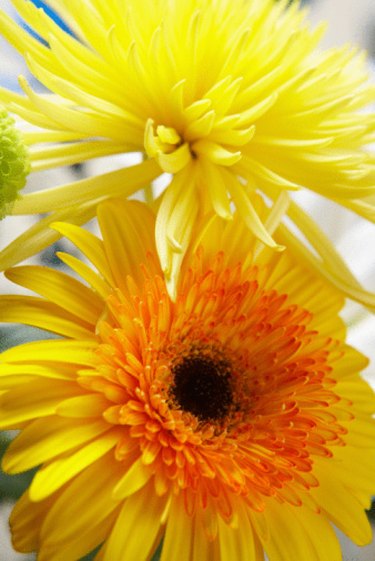
Marigolds are an attractive summer annual that adds a reliable burst of color to your landscape from summer through fall. While the plants will wilt and die back in the fall, the flowers are easy to grow again from seed the following season. Marigolds not only brighten you garden, but some cultivars might actually help repel pests from your garden, according to horticulturalists with the Clemson Cooperative Extension Service. Planting and caring for seasonal marigolds in your landscape is a simple process.
Types
Video of the Day
Several types of marigold seeds are readily available to choose from. All cultivars are derived from two species: African marigolds (Tagetes erecta) and French marigolds (Tagetes patula). However, the common names are misleading because both species are actually native to the Americas. Extensive cultivation of marigolds has generated another common type of marigold called triploid cultivars, which are a cross between African and French marigolds.
Video of the Day
African Marigolds
African marigolds have large double flowers that vary in texture and appearance. African marigold plants can grow up to 3 feet tall and have yellow to orange-colored flowers that can grow over 5 inches in diameter.
French Marigolds
French marigolds are small flowering plants that have a spreading, shrub-like growth habit. The plants range in size from 8 to 16 inches tall. The flowers rarely grow larger than 2 inches in diameter but come in a wide range of colors.
Triploid Marigolds
Triploid marigolds produce the longest lasting flowers in home landscapes. These cultivars are sterile and unable to set seed so the plants bloom repeatedly through the summer. The flowers are slower to germinate and grow, but once established they produce healthy blooms through early fall.
Planting
Mix organic compost into your flower bed in the spring before planting marigold seeds. The plant grows best in moist, well-drained soils in full sunlight. Sow the seeds just below the soil surface after the risk of frost has passed in your growing area. Space French marigolds 6 to 9 inches apart while the larger African and triploid marigolds should be spaced at least 18 inches apart. Water the plants thoroughly and maintain soil moisture as the plants develop. .
Care
Marigolds require little additional care once established in your garden. You can facilitate multiple blooms on your marigolds by pinching back spent and wilted flowers. Stake large African marigolds to prevent damage from storms and high winds. Marigolds are rarely disturbed by pests or disease, and French marigolds help repel soil nematodes from your garden. Marigolds will continue to grow in your home garden until the first frost.
- Iowa State University; Marigolds; Richard Jauron; March 15, 1996
- Alabama Cooperative Extension Service; Greenhouse Production of Marigolds; J.R. Kessler, Jr.; July 1998
- Clemson University; Marigold; Karen Russ and Bob Polomski; March 1999
- University of Nebraska, Lincoln: 2010- The Year of Marigolds;
- Alabama Cooperative Extension; Dispelling Marigold Myths; Robyn Howe and Mary Beth Musgrove