
When you think about bacteria, you may think of getting sick, or infected. However, bacteria are necessary for good health. It’s only when bacteria overgrow, or you encounter strains that are harmful, that bacteria becomes a problem. Humans have between six and 30 different types of bacteria in their mouths. Conduct an experiment on saliva and bacteria, for a Science Fair project to which everyone can relate.
What's Growing in Your Mouth?
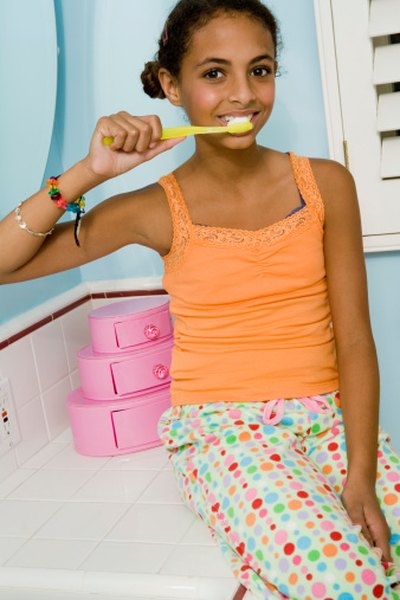
Did you brush your teeth completely? Check your brushing skills with a pre-made petri dish and a sterile swab. Swab the inside of your mouth, and apply the sample to the petri dish using a zig-zag motion. Incubate overnight at 99 degrees. Observe the sample and record your results. Repeat the incubation, observation and recording of results for the next four days.
Dog vs. Human

Is a dog’s mouth really cleaner than a human’s mouth? To find out, you need six pre-made petri dishes, a permanent fine-tip black marker, individually-wrapped sterile swabs, three human volunteers, three canine volunteers (preferably dogs that drool, such as a mastiff or St. Bernard), compound microscope, six glass slides with coverslips and Gram stain.
Collect the samples of fresh saliva from the human and canine volunteers. One at a time, unwrap a swab, and swipe around the inside of the cheeks, and the gums around the molars. Put the sample on the agar using a zigzag motion. Close the petri dish and label it with the name, and either “human” or “dog.” Place the petri dishes in a warm, dark environment for 24 hours. Use a clean swab to transfer some bacteria from each petri dish, to a labeled microscope slide. Add the stain. Observe the amount of bacteria on each slide. Count the bacteria in a square centimeter. Multiply by the area of the slide. Record your observations and results.
Does Dog Drool Kill Bacteria?
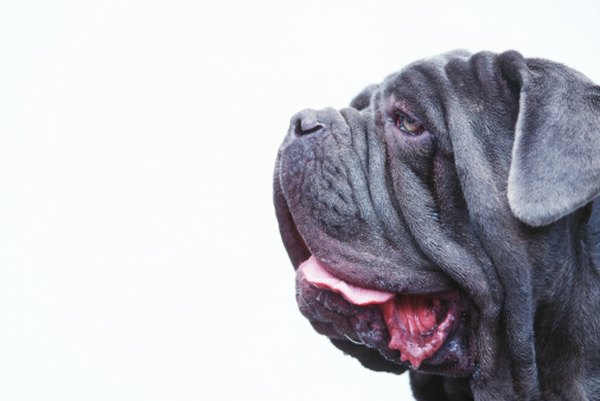
Historical lore tells of hunters and pioneers with injuries that heal after being licked by an animal. Are these just folktales, or are they true? Find out with five pre-made petri dishes, five individually-wrapped sterile swabs, non-pathogenic freeze-dried staphylococcus epidermis bacteria, a permanent fine-tip black marker and fresh saliva from a pet dog that drools, such as a mastiff or St. Bernard.
Sprinkle the staphylococcus bacteria into four petri dishes. Label one petri dish “bacteria control.” Obtain a fresh dog drool sample using a swab, and apply, using a zig-zag motion, to the remaining petri dish, labeled “drool control.” Close the petri dishes, and place in a warm, dark environment for 72 hours. Collect three fresh dog drool samples. Apply each sample to a separate petri dish that is not a control, using a zig zag motion. Close the petri dishes and place them in an area with no direct sun. Observe periodically over the following five days. Record your observations. Does dog drool kill bacteria? Are there negative effects of dog saliva? Could the mechanical effect of licking be involved in the healing process?
Does Mouthwash Kill Germs?
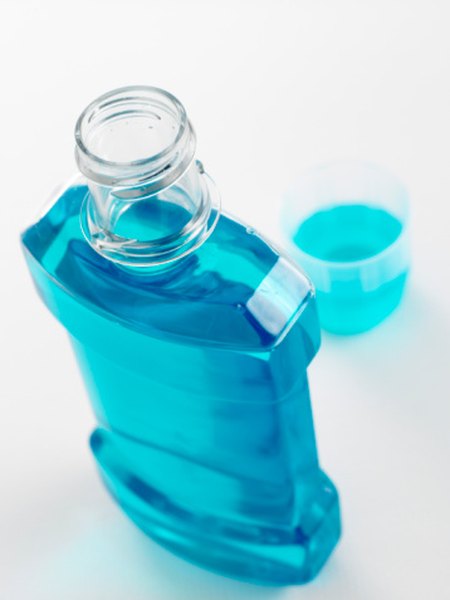
Do mouthwashes “kill the germs that cause bad breath?” Find out using two individually-wrapped sterile swabs, two pre-made blood agar petri dishes, a fine-tip permanent marker, sterile inoculating loops, mouthwash, glass slides with coverslips, Gram stain and a compound microscope.
Swab the inside of your mouth. Apply the sample to a petri dish, rubbing the swab several times in one area of the dish. Use an inoculating loop in a zig-zag motion to spread out the sample. Swish 10 milliliters of mouthwash in your mouth for one minute. Swab the inside of your mouth. Apply the sample to one area of a different petri dish, labeled “mouthwash.” Use an inoculating loop in a zig-zag motion to spread out the sample. Incubate the petri dishes overnight at 99 degrees Fahrenheit. Observe the petri dishes, and record and draw any differences, or changes. Look at the blood agar. An incomplete color change, or green color, indicates the presence of normal streptococci. Streak each bacterial colony to a different area of the agar, using a new sterile inoculating loop for each colony. Incubate at 99 degrees overnight. Perform a gram stain of each colony, and examine under a microscope. Record your results. Is there any bacteria still growing in the mouthwash petri dish?
References
About the Author
Annette Strauch has been a writer for more than 30 years. She has been a radio news journalist and announcer, movie reviewer for Family Movie Reviews Online, chiropractic assistant and medical writer. Strauch holds a Master of Arts in speech/broadcast journalism from Bob Jones University, where she also served on the faculty of the radio/TV department.
Photo Credits
Jupiterimages/Photos.com/Getty Images