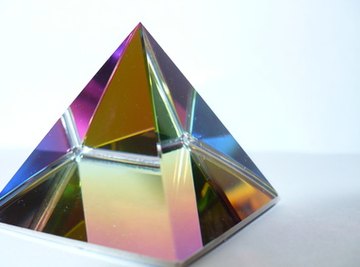
Teach the science behind the electromagnetic spectrum by using a prism. White light is made up of the visible colors of the electromagnetic spectrum, and a prism can bend the light and demonstrate the different wavelengths that colors of the spectrum display. By using a prism and other materials, you can show students the mechanics of a rainbow and how to create the best rainbow. The colors displayed will be red, orange, yellow, green, blue, indigo and violet.
- Prism
- White paper
- Flashlight
- Colored pencils
- Black paper
- Cardboard Box
- Scissors
- Measuring tape
You can also display the color spectrum by spraying water into the air while facing away from the sun.
Instruct students to measure a rectangular hole with a width of approximately 5 mm on the bottom side of the cardboard box. Have them draw the rectangle with their colored pencils.
Tell students to use scissors to cut a small rectangular hole in the bottom side of the cardboard box.
Instruct students to tape the white sheet of paper to the opposite side of the hole on the inside of the box.
Have students place the black sheet of paper flat on the bottom inside of the box and place the prism on top of the paper.
Turn off all the lights in the room. The darker it is, the better the display of the color spectrum.
Instruct students to turn on the flashlight and shine it through the rectangular hole in the cardboard box. This will display the color spectrum on the white paper in the box.
Have students trace the color spectrum displayed on the white paper on the inside of the box with their colored pencils. The colors should be the order of red, orange, yellow, green, blue, indigo and violet.
Things You'll Need
Tips
References
About the Author
Residing in Nashville, Tenn., Kiley Mitchell has been writing topical articles and SEO copy since 2002. He has done work for the Wyndham hotel chains and has written about topics including travel, music, online marketing, business, health and literature. Mitchell holds a Bachelor of Arts from Indiana University in Bloomington.
Photo Credits
prism image by pncphotos from Fotolia.com