Things You'll Need
White, dark brown and tan spray paint
Cardboard
Sugar cubes
Plastic straws
Small wooden rods (optional)
Wooden coffee stir sticks or craft sticks
Hot glue
Figurines and embellishments
Alamo floor plan
Gloves
Safety mask
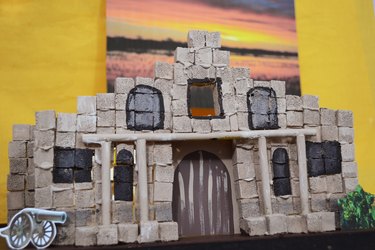
The Alamo was significant during the Texas Revolution and several important battles were fought here. It's often called the "Shrine of Texas Liberty" where many brave men died defending their homeland, and it has come to symbolize the struggle against impossible odds. The story of the Alamo is commonly taught in schools, and one way to illustrate its legend is to build a model.
Step 1
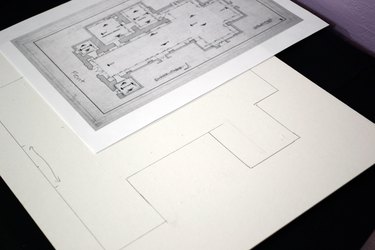
Calculate the proper size of the building if you plan on building it to scale. Cut the cardboard to reflect the width and length of your building, leaving an extra inch or two on each side to carry the model easily.
Video of the Day
Step 2
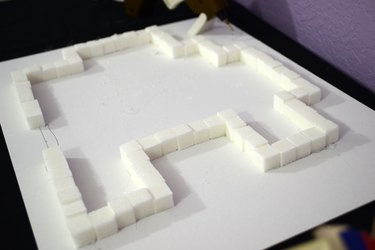
Build the outside walls first, outlining the entire building using the sugar cubes. Place the sugar cubes like bricks so that the edges of the cubes are staggered. Hot glue each sugar cube securely. When you're finished, attach the entire outer wall securely to the card board using hot glue. Make sure to remember the windows and the doors.
Step 3
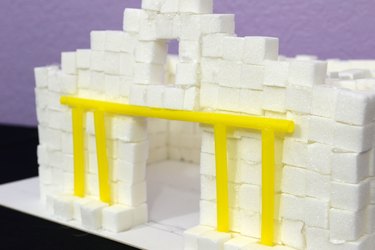
Use straws to make the pillars in front of the Alamo's main entrance. Two should be on each side, with a fifth straw forming the balcony in the front. Cut the straws if they are too long. For larger models, use thicker straws such as those for bubble tea, or small wooden rods.
Step 4
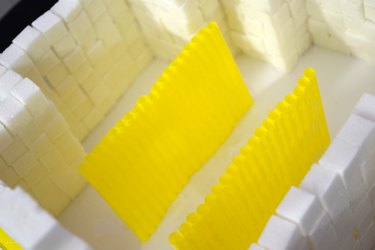
Using the Alamo's floor pan, build inner walls and buildings. You can use sugar cubes or additional straws if you need thinner walls.
Step 5
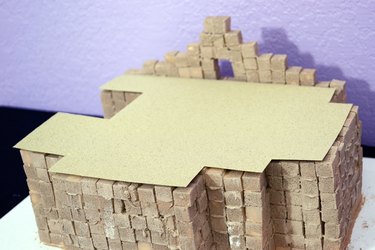
Create roofing by cutting the coffee stir sticks to the correct size and laying them as planks over inner buildings. To build a sloped roof, glue an additional sugar cube or bit of straw to the top of the wall at either of the long ends. Lay a stir stick across these and lay the rest of the roof against it and the top of the wall. Glue everything securely.
Step 6
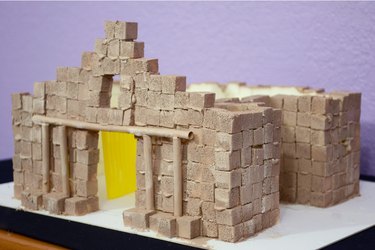
Paint or spray paint the entire structure light tan. Make sure to cover it evenly. Painting the sugar cubes this way will give them the appearance of brick. You may wish to do this step before you add the roofs so they are a different color.
Step 7
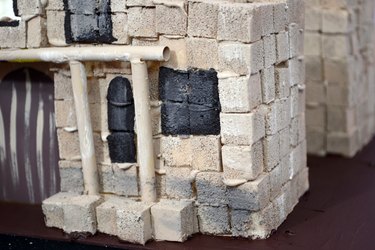
Use white or dark brown paint to add any details, such as doors or window frames.
Step 8
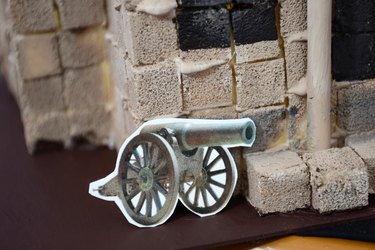
Add any further embellishments, such as horse or men figurines, small carts or fake plants.
Tip
Collect pictures of the Alamo to help you visualize the project. You can find a simple floor layout at TheAlamo.org.
Consider leaving the roof off of the church or other large areas and adding detail inside so observers can see inside these parts of the Alamo. Reserve the roofs for the smaller warehouses or guard posts.
Warning
Practice proper safety precautions when using paint, hot glue guns or other potentially hazardous materials.
Video of the Day