
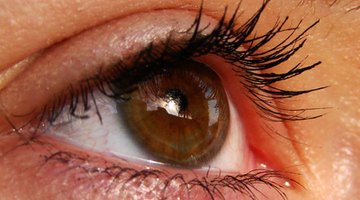

Visual memory is the ability of a person to recall or remember specific information that's been expressed in a visual image of some sort, such as an activity, an image, a scene or words. How good a person's visual memory is depends on their ability to store and retrieve these images after the stimulus has been removed. In order to test this ability, a professional can administer a visual memory test to someone who may be showing signs of difficulty.
What Are the Two Types of Visual Memory?
To better understand visual memory, it can be broken up into two types.
Short-Term Visual Memory: A person's ability to store and recall images that have just been viewed a second or a few seconds prior. An example of short-term visual memory is looking at several cards and being able to recall each one right away.
Long-Term Visual Memory: A person's ability to store and recall images from a long time ago. An example of long-term visual memory is being able to recall how to get from your old childhood home to the closest supermarket, without having to use a GPS to do so.
Why Is Visual Memory Important?
Visual memory is important for a variety of reasons. First and foremost, many would not be able to function properly in society without having visual memory. Most people are able to rely on their long-term visual memory to remember faces or events from the past. And people also rely on short-term memories to make connections rapidly and be able to make quick decisions based on them.
If a person is unable to do this, it may be indicative of a visual processing disorder, which can often appear with learning disabilities such as dyslexia or dyscalculia. Having a visual processing disorder, or VPD, can make it difficult for students to do well in various school subjects, especially reading, writing and math. Being able to diagnose a VPD problem early on through a visual memory test can help teachers and specialists do early interventions with the children, so they do not fall behind in school.
What Is a Visual Memory Test?
As an adult, you probably already have a good idea about the strength of your visual memory. And while there are ways to test your visual memory online or by seeing a professional, most people are given visual memory tests in school as children if they are showing signs of struggle with their visual memory. However, there are several tests to detect visual memory problems at any age:
- Benton Visual Retention Test: This test is for children over 8 years old until adulthood. It tests visual perception and memory. Most of the test involves looking at diagrams and recalling what you've seen. It can help detect everything from reading disabilities to Alzheimer's or traumatic brain injury.
- Benton Facial Recognition Test: This test is usually used on young adults or adults to test their ability to recognizes faces. It's typically used for research purposes.
- The Wechsler Memory Scale: This test can be used for people who show signs of problems with memory function. The test has seven sections that test memory and cognitive abilities through facial recognition tests, letter-number sequencing tests, spatial span tests, mental control tests, word list tests, family picture tests, etc.
Keep in mind that the only people that can give these memory test games are a doctor or researchers who are qualified to do so. Special education teachers may know which tests would be ideal for students showing signs of a VDP, and although they can administer some assessments, ultimately, the child will be referred to a school psychologist.
How to Improve Your Visual Memory
If you're concerned that you or your child may have some issues with visual memory, then a specialist can help you manage those issues. But visual memory is important for even those who don't have struggles. That's because while your visual memory may be good now, unfortunately, it may not always be that way.
Doing some visual memory exercises every day can help keep your memory function strong and even help lower the risk of Alzheimer's or dementia. But it can also help you do better in school because you'll be able to recall information easier.
In order to improve your or your child's visual memory, there are several things that can be done:
- Download brain game apps and play one for a few minutes every day
- Visit websites like Mental Up that have visual memory games
- Play games like "Memory" or do word search puzzles
- Practice recalling invents in a story
- Place seven cards out and try to remember what they were
- Train to memorize phone numbers instead of just keeping them in your phone as a number memory test
- Copy notes off the board when you're in class, even if you don't feel you need to
Related Articles







References
Tips
- A comprehensive study of visual memory in older adults conducted by the University of California, San Francisco, has concluded that "brain fitness" exercises can reverse age-related decreases in visual memory ability by about 10 percent, restoring function to the same level as that of younger adults (see Sources).
Writer Bio
Hana LaRock is a freelance content writer from New York, currently living in Mexico. She has spent the last 5 years traveling the world and living abroad and has lived in South Korea and Israel. Before becoming a writer, Hana worked as a teacher for several years in the U.S. and around the world. She has her teaching certification in Elementary Education and Special Education, as well as a TESOL certification. Hana spent a semester studying abroad at Tel Aviv University during her undergraduate years at the University of Hartford. She hopes to use her experience to help inform others. Please visit her website, www.hanalarockwriting.com, to learn more.