The scientific method involves asking a question, doing research, forming a hypothesis and testing the hypothesis via an experiment, so that the results can be analyzed. Every successful science experiment must include specific types of variables. There must be an independent variable, which changes throughout the course of an experiment; a dependent variable, which is observed and measured; and a controlled variable, also known as the "constant" variable, which must remain consistent and unchanging throughout the experiment. Even though the controlled or constant variable in an experiment does not change, it is every bit as important to the success of a science experiment as the other variables.
TL;DR (Too Long; Didn't Read)
TL;DR: In a science experiment, the controlled or constant variable is a variable that does not change. For example, in an experiment to test the effect of different lights on plants, other factors that affect plant growth and health, such as soil quality and watering, would need to remain constant.
Example of an Independent Variable
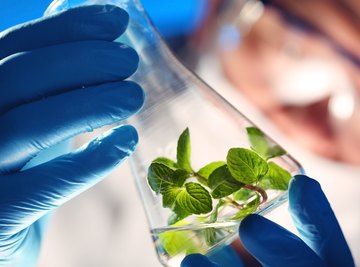
Let's say that a scientist is performing an experiment to test the effect of different lighting on houseplants. In this case, the lighting itself would be the independent variable, because it is the variable that the scientist is actively changing, over the course of the experiment. Whether the scientist is using different bulbs or altering the amount of light given to the plants, the light is the variable being altered, and is therefore the independent variable.
Example of a Dependent Variable
Dependent variables are the traits that a scientist observes, in relation to the independent variable. In other words, the dependent variable changes depending on the alterations made to the independent variable. In the houseplant experiment, the dependent variables would be the properties of the plants themselves, which the scientist is observing in relation to the changing light. These properties might include the plants' color, height and general health.
Example of a Controlled Variable
A controlled or constant variable does not change throughout the course of an experiment. It is vitally important that every scientific experiment include a controlled variable; otherwise, the conclusions of an experiment are impossible to understand. For example, in the houseplant experiment, controlled variables might be things such as the the quality of soil and the amount of water given to the plants. If these factors were not constant, and certain plants received more water or better soil than others, then there would be no way for the scientist to be sure that the plants weren't changing based on those factors instead of the different kinds of light. A plant might be healthy and green because of the amount of light it received, or it could be because it was given more water than the other plants. In this case, it would be impossible to draw proper conclusions based on the experiment.
However, if all plants are given the same amount of water and the same quality of soil, then the scientist can be sure that any changes from one plant to another are due to changes made to the independent variable: the light. Even though the controlled variable did not change and was not the variable actually being tested, it allowed the scientist to observe the cause-and-effect relationship between plant health and different types of lighting. In other words, it allowed for a successful scientific experiment.
References
About the Author
Maria Cook is a freelance and fiction writer from Indianapolis, Indiana. She holds an MFA in Creative Writing from Butler University in Indianapolis. She has written about science as it relates to eco-friendly practices, conservation and the environment for Green Matters.