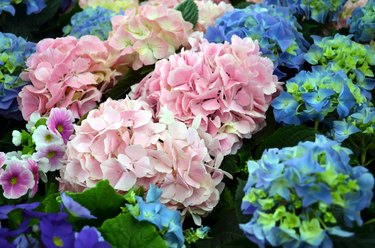
Hydrangeas (Hydrangea spp.) are loved by gardeners for their bold blooms and southern charm. With 23 species to choose from, hydrangeas can be grown throughout U.S. Department of Agriculture plant hardiness zones 3 through 9. If you're not sure which species of this perennial shrub will grow in your area., take a trip to your local garden center. They're likely to carry only varieties that will thrive in your micro-climate, and can help you pick the perfect variety for your garden. Hydrangeas are easy to grow, fairly disease-resistant and require very little attention, so make sure you include some of these vibrant ornamentals in your outdoor space.
Location
Video of the Day
When planting hydrangeas, choose a location that receives partial shade. Hydrangeas do best with morning sun and afternoon shade, but aren't overly picky. The plants will usually flower readily as long as you're not trying to grow them in full shade. Hydrangeas aren't too fussy about their soil requirements, either. If they don't sit in standing water, they'll do well. You will, however, need to plant your hydrangeas far from tree roots, because they don't like to compete for soil nutrients. It's also smart to plant hydrangeas in an area where they are free to expand. If you give them plenty of room to grow, you won't have to prune them.
Video of the Day
Planting
Once you've chosen your hydrangeas' home, dig a hole there as deep as the plant's current root ball but 2 feet wider. If the roots of a plant are tightly bound, gently spread them with your fingers. Place the plant in the hole and backfill it halfway. Pour some water into the hole and allow it to drain before backfilling the hole the rest of the way. Make sure the soil meets the plant just above the roots. Hydrangeas can rot if they are placed too deeply in the planting hole and may dry out if they are too shallow. For maximum blooms, you'll need to get the planting depth right. Water in your freshly planted hydrangea. Space multiple plants 3 to 10 feet apart.
Watering and Fertilizing
Hydrangeas like moist soil but not wet feet. Whether from rain or manual watering, hydrangeas need a deep watering once a week. When the plant reaches two years old, it should be able to fend for itself and will only need irrigation during extended periods of drought. If you see wilting leaves, your hydrangea needs a drink. If your soil lacks nutrients, fertilize your hydrangea with a granular slow-release 10-10-10 fertilizer once a year in spring or early summer. Fertilizing too much will cause your hydrangea to produce lots of big green leaves but few flowers.
Pruning
Pruning hydrangeas is generally unnecessary except when disease is present. If you notice signs of illness, prune the plant stems back to the ground in late winter. Otherwise, simply prune to remove any dead wood and eliminate suckers at the bottom of the plant. Always disinfect your pruning shears before use by wiping them down with denatured alcohol. This prevents the spread of diseases from one plant to another.
Changing Colors
Hydrangeas are unique in the fact that you can control the bloom colors of some species, such as French hydrangeas (Hydrangea macrophylla). To turn hydrangeas blue, lower the soil pH by adding sulfur or peat moss to the soil around them and watering it in. For pink flowers, you'll need to raise the soil pH using ground limestone. The plants need plenty of aluminum to change color, as well, so add aluminum sulfate to the soil to assist with either color change. This trick only works with pink and blue flowers -- white hydrangeas will stay white no matter what soil amendments you make.