


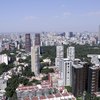


New York is a fascinating city. Home to some of the country's best-known landmarks, such as the Statue of Liberty and the Empire State Building, this geographic area is also unusual in many other ways. From historical surprises to incredible modern marvels, New York City never ceases to amaze.
History
The history of New York City (NYC) is full of fun and strange facts that seem like legend, but are 100 percent true. For example, NYC was the capital of the United States between 1789 and 1790, during the time when George Washington was sworn into presidency. In fact, Washington served at Federal Hall, in what is now the Wall Street area, where the U.S. Constitution was also ratified and the U.S. Bill of Rights drafted. Before the city became the nation's capital, its population was barely more than 30,000 residents, second to Philadelphia, which was the largest city in the country at the time. By the year 1790, however, NYC's population had increased to 49,447 and earned the city the top place. Today, NYC has more than 8 million inhabitants and is twice the size of the second most-populated city in the country, Los Angeles.
Expert Insight
New York City is home to many “firsts” in the country. The first pizzeria in the United States was opened in NYC in 1895 by Gennaro Lombardi. Toilet paper was invented by NYC resident Joseph C. Gayetty in 1857. The city was the first stop of Dutch settlers in the new world, who colonized the area in the 1600s. Coney Island, in Brooklyn, is one of the country's oldest amusement park and home to the oldest wood coaster, The Cyclone. Coney Island still houses one of the last remaining side shows in the country, full of freaks, unusual performers and human curiosities.
Attractions
New York City is home to more than 80 museums, which range from top art and history centers to interesting destinations and quirky funhouses. The Museum of Natural History, the MoMA (Museum of Modern Art) and the Intrepid Sea-Air-Space Museum (set on board of a 900-foot aircraft carrier) are the 3 most-visited museums in the city, both by locals and tourists. However, the city is also home to unique museums, such as the Ellis Island Immigration Museum, which chronicles the history of the 12 million immigrants who arrived by ship to the island between 1892 and 1954. Other unique museums include the Fire Museum, the American Museum of the Moving Image (chronicling the history of cinema) and the New York Transit Museum (an underground subway museum). Theodore Roosevelt's Birthplace has been turned into a museum and is also open for tours.
Demographics
New York City is the most culturally diverse city in the United States and the reason the term “melting pot” was created (in an effort to describe the mixed population on Lower Manhattan). Today, 37 percent of the city's population is foreign-born, which makes this the U.S. city with the most languages spoken, 170. The larger communities are Jewish (the largest in the world outside Israel), Dominican, Chinese, Mexican and Russian. In 1698, 74 years after it was first settled, the city was home to 4,937 inhabitants. Today, the city is home to more than 8 million, of which 26 percent are African American (the largest population of any American city). Italians, West Indians and Irish, while no longer the major communities in the city, still have a large presence. During the 19th century, NYC was the main port of entry for immigrants arriving to the United States from Europe.
Transportation
More than 60 percent of NYC's residents do not own a car, a percentage higher than in any other city in the United States. This makes public transportation not only convenient but also indispensable in the city. With 468 stations, NYC's subway system is the largest in the world and one of the few that remains open 24 hours a day, 365 days a year. Completing the public transportation system are buses (both local and intercity), an aerial tramway, a ferry (to Staten Island) and a system of railway that connects the city to neighboring New Jersey. More than 100,000 people ride their bikes to work every day, making NYC the most energy-efficient city in the country.
References
Photo Credits
- New York City image by paolobenne from Fotolia.com