What Are the Atoms That Make Up Lipids?

What Are the Atoms That Make Up Lipids? thumbnail
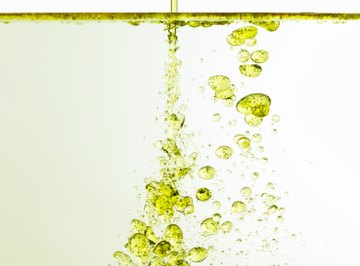
The chemical structure of oil prevents it from mixing with water.

All lipids are made up of the same atoms: carbon (C), hydrogen (H) and oxygen (O). Lipids contain the same elements that make up carbohydrates but in different proportions. Lipids have a large proportion of carbon and hydrogen bonds and a small proportion of oxygen atoms. Although the structures of different lipids vary slightly, the large amount of C-H bonds means that all lipids are extremely energy-rich.

  1. Properties of Lipids

    • Lipids are amphipathic. This means that the molecules have a soluble part and an insoluble part and are, therefore, nonpolar and usually do not mix well with polar substances, such as water. While the hydrophobic, insoluble parts group together, the hydrophilic parts, which have an affinity for water, stick out and form cell membranes. Types of lipids include fats, waxes, oils and steroids. Lipids also make up a significant part of the body, forming a large part of cell membranes. They have the ability to store and create energy for cells when metabolized.

    Fatty Acids

    • Forms of lipids known as fatty acids typically have an even number of carbon atoms, usually between 12 and 24. If a fatty acid has no double bonds between its carbon atoms, it is saturated. Saturated fats contain the maximum possible number of hydrogen atoms.

      A naturally occurring unsaturated fatty acid has between one and six double bonds between carbon atoms. Each of these double bonds are separated by two or more single bonds. These types of bonds between atoms prevent the molecules from packing, lowering the melting point.

    Phospholipids

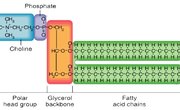
    • Phospholipids are types of lipids that are soluble in both oil and water. This is possible because the fatty acids' hydrocarbon tails are hydrophobic, like most lipids. The phosphate group that attaches to two fatty acids in the place of a usual third fatty acid, however, is hydrophilic, due to the oxygen atoms that have many pairs of unshared electrons. Substances that are soluble in oil and water, such as lecithin, are known as emulsifying agents. Phospholipids also play an important role in the body. Because they are able to form lipid bi-layers, phospholipids are a major component of cell membranes.

    Isoprene-Based Lipids

    • A type of lipid that is based on isoprene, a branched five-carbon structure, is often used in medicines, perfumes and spices. The steam distillation of plant material led to the identification of isoprene. The extracts from this process became known as essential oils. Many molecular structures contain fused isoprene monomers. These include steroids, such as cholesterol, estrogen and testosterone.

Related Searches:

References

  • Photo Credit Ryan McVay/Lifesize/Getty Images

Comments

You May Also Like

  • What Elements Are Found in Lipids?

    Lipids are large organic molecules or "macromolecules." Due to their association with dietary fat, lipids won't win many popularity contests. But lipids...

  • What Makes Up Lipids?

    Lipid is the biochemical name for the fats we eat. Lipids are waxy, insoluble hydrophobic macromolecules. Lipids make up fats, oils, steroids...

  • What Types of Bonds Do Lipids Form?

    What Types of Bonds Do Lipids Form?. Lipids are hydrophobic molecules (molecules that are repelled by water). This is the only thing...

  • How Do Cells Make Lipids?

    Along with carbohydrates and proteins, lipids are one of the most integral carbon compounds to life. They provide energy storage, cellular structure,...

  • Structure of Lipids

    Lipids are a major part of the body, making up the bulk of cell membranes, the contents of fat cells and several...

  • How to Calculate Kcal

    Kcals measure the amount of energy provided by a type of food. Foods contain one or more of the following substances: carbohydrates,...

  • What Is a Fat Cell?

    Fat cells---or---"adipocytes" are the cells that make up the adipose tissue. These cells are used by the body to synthesize and store...

  • What Are the Polymers of Lipids?

    Glycerol and triglycerides are the two types of molecules from which fats and oils are made. Saturated fats are most commonly found...

  • Why Are Lipids Insoluble in Water?

    Lipids are a broad group of chemicals that include steroids, fats, and waxes characterized by their insolubility in water. This insolubility is...

  • How Are Plants Able to Produce Lipids?

    Comments. You May Also Like. How do I Make Plant Shelves for Windows? Hand-built shelves can be used to create attractive window...

  • What Is the Function of an Emulsifier?

    An emulsifier is a chemical that encourages the suspension of one liquid in another so that they form one homogenous substance. They...

  • Use of Lipids

    Lipids are any of several chemicals in the body that are not soluble in water including fats, sterols, vitamins and waxes. People...

  • The Effect of Menopause on Cholestrol

    While heart disease is uncommon in premenopausal women, women who are postmenopausal are affected in epidemic proportion. In addition, a woman's blood...

  • Which Elements Make Up the Compound Glucose?

    There are twelve Hydrogen atoms per glucose molecule. These hydrogen atoms connect in all places to the glucose molecule where valance electrons...

  • How Do Atoms Combine to Make Compounds?

    While atoms of an element do exist alone, they often combine with other atoms to form compounds, the smallest quantity of which...

  • How Many Protons Does Calcium Have?

    Every single discovered atom has protons, electrons and neutrons. The number of each depends on its assigned atomic number. Protons have a...

  • Different Kinds of Atoms

    Atoms, once thought to be the smallest building blocks of nature, are in fact made of smaller particles. Most often these particles...

  • How to Make Magnesium Chloride Oil

    Magnesium chloride is a water soluble salt, and one of the most important minerals the body uses for cell metabolism. As a...

Related Ads

Featured