

Learning to write numbers is a key skill that helps lay the foundation for handwriting and math skills later in life. Children often learn to write numbers during the preschool and kindergarten years, and the right kinds of hands-on activities will promote number-writing skills, as well as give children time to practice their technique.
Act It Out
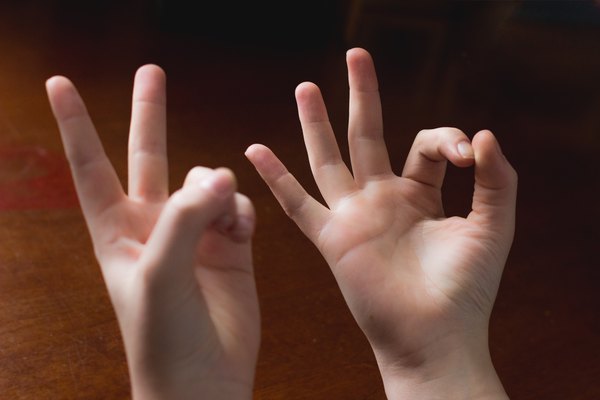
Show children how to write numbers in the air, which helps familiarize them with the shape of each number. Point your finger into the air and show children how to move straight down for a number one, and so on, at least to number 10. Say the number you're writing in the air as you go, and encourage children to do the same as they make their air numbers. Once children have the hang of it, call out a number and ask the children to write it in the air, saying it as they go.
Get Hands-On

Of course, writing with pencil and paper is an essential skill, but writing numbers in other media can help children learn to write them correctly. For example, pour sugar, salt, sand or glitter into a flat aluminum pie plate and ask children to form the numbers using their finger or a paintbrush. This helps keep children interested in the writing process. Making numbers with sidewalk chalk or paint on paper are other ways to interest children in practicing their writing. Encourage children to trace numbers they see in the world around them. For example, children can use their pointer finger to trace the numbers on addresses or on items hanging in their classroom. This familiarizes the students with the numbers and helps them learn how to form them.
Rhyme It

Make up rhymes to help children remember how to form the letters. For example, you might say "making a straight line is fun, and now you have a one." Teach these rhymes to the children and encourage them to recite them as they work on practicing writing their numbers. Short phrases recited as children write numbers work similarly. "The woman walked around in a circle until she got home," for example, is a sentence to say as students write the number zero because it helps them form a visual image of the circular shape of a zero.
Count and Write

Play rolling races. First, divide a piece of paper into six columns, writing one number, one through six, at the top of each. Make a copy for each child. Have the children roll their dice, count the dots and record the number they rolled in the correct column. Ask the students to roll their dice 20 times, writing each number as they go. Staple small pieces of blank paper to form books. Give one to each child, asking her to draw items on each page. Then the child will count the items she drew and write the corresponding number. For younger children who aren't adept at drawing yet, place stickers on each page and let them count and record them.
References
About the Author
Sara Ipatenco has taught writing, health and nutrition. She started writing in 2007 and has been published in Teaching Tolerance magazine. Ipatenco holds a bachelor's degree and a master's degree in education, both from the University of Denver.
Photo Credits
E. Sanders/Demand Media