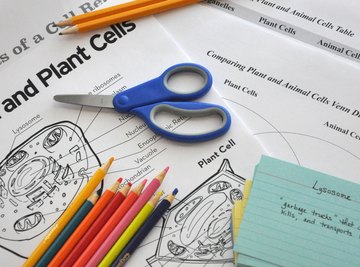
In about the fourth grade, students begin learning about the structure and function of plant and animal cells. Many students find this subject interesting but difficult because the terms and definitions are so complex. You can use hands-on and group activities to help your students understand the different parts of a cell and what they do.
Cell Part Presentation
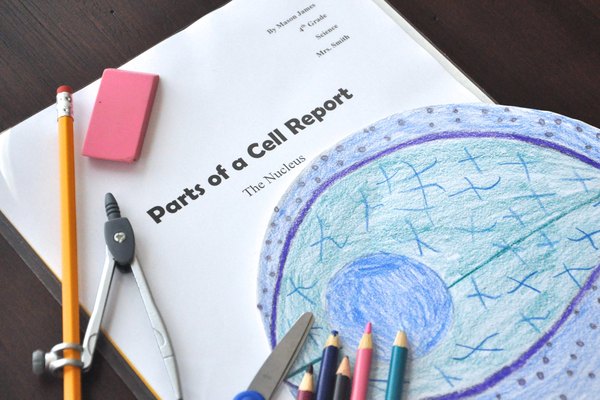
Divide the students into groups, and assign each group a cell part. Some of the parts you could assign are cell wall and membrane, nucleus, ribosomes, mitochondria, cytoplasm and vacuole.
Get two large sheets of butcher paper and draw a rough outline of a plant cell on one and an animal cell on the other. Give each group some paper and have them draw, color and cut out a picture of their part for each type of cell. Their pictures should be the appropriate size and quantity to fit into the outline on the butcher paper.
Have each group prepare a report on their cell part. Give each group a turn to share their report with the class and tape their pictures onto the cell outlines.
Comparing Plant and Animal Cells
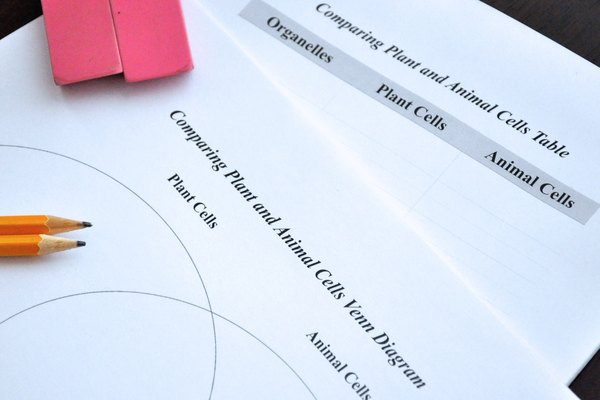
Have each student make three columns on a piece of paper with the following labels: Organelles, Plant Cells and Animal Cells. Have them make a list of organelles in the left column and then place check marks in the Plant Cell and Animal Cell columns to show which type of cell contains that organelle.
Have them make a Venn diagram to show the similarities and differences between plant and animal cells. Also show them pictures, or let them use a microscope to look at slides, of different cells. Have them identify which type of cell each is.
Make a Cell Model

Your students can make a 3-D model of a cell using quart-sized zipper-top bags, clear plastic containers, light corn syrup and assorted objects to represent the different organelles.
Place items like cereal, confetti, pasta, beans, toothpicks, beads, yarn, pipe cleaners, candy, balloons and bubble wrap on a table. Let each student choose items from the table to place in his zipper-top bag. The students can cut, bend or combine the items if they want to.
For an animal cell, have each student place their bag into a second zipper-top bag for strength, and add one cup of corn syrup. For a plant cell, add the corn syrup and place the bags in a clear plastic container. Have the students describe the organelles in their cell and explain why they chose the objects they did.
Guess the Cell Part
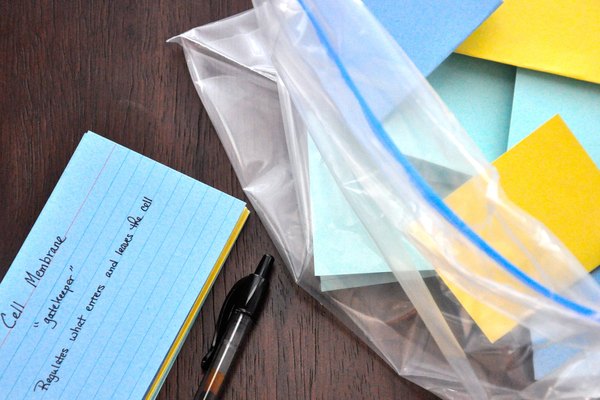
Write the different cell parts and processes onto cards and place them in a bag. Divide the students into two teams. Have a student from one team pull a card from the bag and try to get her teammates to guess what the card says. Have her act the card out, describe the part or process in five words or answer yes and no questions. If the student’s teammates do not guess correctly, the other team gets to try. The team that guesses correctly gets one point. Continue playing until one team reaches ten points.
About the Author
Pamela Keene has written professionally since 2007 with articles published on USAToday.com, eHow, Travels.com and other websites. She writes about a variety of topics including home projects, gardening, health, finance, travel and parenting. Keene holds a Bachelor of Science in biochemistry.
Photo Credits
Charley Steward/Demand Media