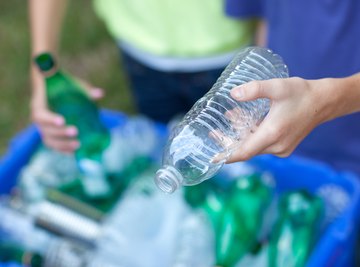
Modern society produces a great deal of garbage. Using organic and inorganic waste materials for science projects can help students see the value of wastes and promote recycling. Science projects made up of waste materials prompt research questions and discussions about the environment, pollution, new types of building materials and alternate green fuel types.
Aerodynamics and Buoyancy
Aerodynamics is the ability of a material to fly through the air with minimal friction, and buoyancy is its ability to float on water. Students can build small airplanes and rafts or boats with recycled materials to observe and compare their characteristics when floating or projected into the air. Waste materials to use include wooden sticks from snacks, recycled printing paper, paper from magazines and various types of lightweight plastic. The project can be explained on a chart that compares the materials used and the method to build each object, as well as ideas on how to incorporate waste products into new building materials for planes, boats and structures.
Food Waste and Recycling
Food waste is one of the biggest consumer problems in the U.S. as it is often dumped into landfills where it causes air, soil and water pollution. Students can investigate their own home kitchens and school cafeterias with a science project to record food and food packaging waste. The project involves going through a garbage can with protective gloves and a mask at the end of each day and carefully recording each item of food and packaging waste. At the end of a week's observation, ask students to discuss related research questions such as the most common foods and packaging types that are thrown away and why most food items are tossed. Also discuss alternate ways to reduce food and packaging waste and ways to implement them at home and school.
Calories and Energy
Wasted food can also be used in a science project to illustrate the energy that food contains. For this experiment, students can dry waste food using a microwave. When dry, they (or an adult, if they are young) can light the dried "garbage chips" on fire. Explain that the fire is happening because the foods contain energy, commonly measured in calories.
Biofuel from Organic Waste
Organic waste such as food and food byproducts decomposes and releases methane and other gases. In the environment, methane gas is a pollutant that contributes to global warming. However, when contained, this biogas can be used as fuel to power factories, engines and stoves, and provide heat. A science project to demonstrate the power of garbage as a green fuel includes collecting various food garbage in glass bottles. Stretch a balloon over the neck of each bottle to seal it off. See how the balloons of the different waste types expand as biogas is released from the decomposing food waste. Fats and greases give off the most energy, producing almost 1000 cubic meters of biogas per ton. A ton of food waste is needed to produce approximately 250 cubic meters of biogas.
References

About the Author
June Kane is a Registered Radiation Therapist (RTT) and radiotherapy instructor from Manitoba, Canada. Her writing experience includes peer-reviewed articles in the Lancet and Journal of Nuclear Medicine and Radiation Therapy, patient information booklets and website content, and student curriculums.