

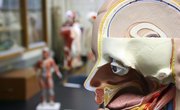
The human eye is an amazing sense organ that allows us to see and make decisions based on what we see. It allows us to appreciate colors, facial expressions and beauty, as well as things than can negatively effect our emotions. Without our eyes, we would not be able to do all the things we do in a single day, such as read, drive or work on computers. Science fair projects that involve the human eye can give students information into how the eye works as well as how outside factors may effect the eye and its important function.
Anatomy of the Eye
The eye is an organ with highly specialized cells that work both individually and together to form vision. Students can research the shape of the eye and information about how each part contributes to vision. They can experiment to see what happens if one of the steps in vision changes, such as altering the shape of the lens. Other ideas include teardrops--researching how are they formed and what are they made of. Measure peripheral vision and eye shape. Explore how the pupil changes size to control the light entering the eye. Can the brain work with the eye to retain a series of images to make a single picture? On higher level, research if corrective lenses have any impact on the ability to see hidden 3-D pictures.
Other Anatomy Ideas
Form an experiment around other anatomical issues such as gender or age and how they might affect eyesight. Do male and female test subjects show any difference in the ability to see peripherally, see illusions or more accurate depth perception? Discuss if pupil color has any effect on vision. Does age or gender affect selective visual attention? Is there are correlation between hand dominance and eye dominance? Research if the blind spot is more perceptible to any group of people according to age or gender.
The Eye and Psychology
The eyes and how what you see influences your thoughts would be a very interesting subject for older students to study. Study the affect that emotional images, both positive and negative, might have on pupil size. Does the color of the room have any affect on the emotions? Can you change a person's emotional state by using a specific color? Does pupil size change with interest in a subject?
Illusions
The world of illusions or tricks of the eye and mind can be a great place to find experiments. Research magic tricks and illusions to explain how and why they work. Do gifted people see optical illusions any differently than the general population? Can their minds decipher tricks played on their eyes? Make a flip-book animation and explain the perception of motion used in the illusion.
Colors
Colors are something our eyes see every moment of every day. Can they affect things such as blood pressure, appetite or the urge to spend money? What is color blindness and is it more prevalent in any one gender or age group and can it be inherited? Determine if all the cells that perceive color in the eye such as cones and rods, tire at the same rate. Can color affect the mind's interpretation of how a food or drink tastes?
Related Articles







References
Writer Bio
Susan King is a teacher with 27 years experience with all ages, grade levels and ability levels, including teaching in China. She has written a book, "The Road to Rebecca," about adopting from China. She graduated from Texas A&M University. She also has a ThM from Colorado Theological Seminary in Christian Counseling and recently received her PhD.