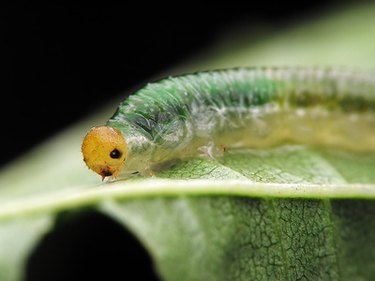
The caterpillar is a plump, nutritious and incredibly slow member of the insect family, which makes it a popular snack for many larger creatures. Caterpillars are the larvae stage of insects such as moths and butterflies, and in addition to being an easy target for predators due to their soft, slow-moving bodies, the caterpillar is further hindered by extremely poor vision. These protein-rich insects are very low on the food chain and have many enemies, such as birds, small mammals, reptiles, amphibians and even humans.
Birds
Video of the Day
Caterpillars sustain their energy predominately through the consumption of plant matter, such as leaves, stem, flowers and roots, so these squishy insects are often found inching along tree branches, putting them in prime territory to be hunted by birds. The sharp beak of a bird can easily snap up a worm-like caterpillar, and it is the ideal snack to share with any baby birds back at the nest.
Video of the Day
Small Mammals
Small mammals, such as rodents (mice, squirrels and chipmunks) and hedgehogs, are high on the list of the caterpillar's enemies. Caterpillars tend to hide in whatever surroundings most closely match their coloring, and in some cases, the brown of the dirt and logs is the ideal place for them to dwell and be found by a small foraging creature.
Reptiles and Amphibians
Reptiles and amphibians, such as lizards and frogs, base the majority of their diet on insects, so they are a natural predator of the caterpillar. Some caterpillars will dwell closer to water sources, making them prime targets of these creatures.
Humans
Humans pose one of the greatest threats to caterpillars because the insects are seen as pests that can wreak havoc on a favorite fruit tree or vegetable garden. Caterpillars are constantly eating plant matter, and a large infestation of the insects can decimate a plant. You can remove the bugs--followed by squishing or relocating--in minor cases and resort to chemical spray to kill the unwanted pests in more serious infestations.