
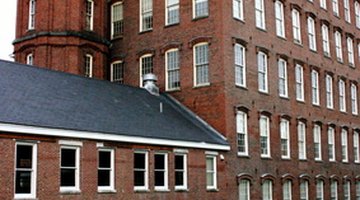

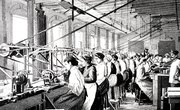
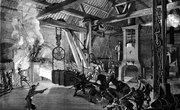
The 1800s brought significant change to the lives of every American, especially women. The country began shifting from an agricultural to an urban society. The reason for the transformation was the Industrial Revolution, which began in England. Most manufactured goods were imported. People who could afford it purchased imported wares; those who could not pay for imports made their own, or bought from local craftsmen. Wars in Europe disrupted the flow of merchandise, and enterprising Americans stepped in to fill the gap. Francis Cabot Lowell built factories in Massachusetts, and the town of Lowell became a center of textile manufacturing. By 1841, there were 10 companies, 32 factories and more than 8,000 employees working in Lowell.
Women Enter the Lowell Workforce
Domestic products were cheaper than imported, and companies strove to keep costs low. A supply of unskilled, cheap factory labor was needed. Lowell hired teenage girls for his factories. The girls moved from farms and small towns to the factory town. The work involved long hours, and it took several months for new employees to learn how to operate the equipment. The young women lived in boardinghouses near the plants. This was the first time large numbers of women left home, lived on their own and supported themselves. They earned from $3 to $3.50 a week, a lot more than they could earn at home. The Industrial Revolution marked the beginning of a separation of workplace and home. Women’s work was domestic and home-based. Mill workers usually worked for a few years, then married and "retired."
Work After the Factory
Married and widowed women sometimes needed to earn money to support their families. Leaving the home was taboo. Women took in boarders and laundry to earn money. Domestic work was another, less desirable alternative. Immigrant and black women often accepted domestic work, frequently living in their employers' homes.
Additional Jobs for Women
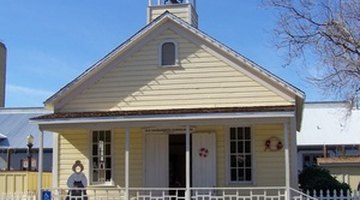
Most girls learned needlework as children and young adults. This skill could be used later in life should a woman need to earn money. Dressmaking and millinery – hat making – were acceptable occupations for middle- and lower-middle-class women. The work could be done at home or in small shops. Garment piece work was also available, and women worked at home. Wages were low and the work tedious. Teaching was another acceptable woman’s profession. Teachers, like factory workers, frequently worked until marriage.
The Western Migration
The 1840s marked the migration of thousands along the Oregon Trail and the beginning of massive settlement of the West. Women traveled with their men. Many lost husbands and were forced to support themselves and their families. They worked in a variety of businesses established in new communities set up to assist the settlers moving west.
End of an Era
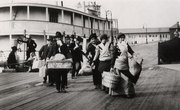
Labor disputes erupted as early as the 1830s in the Lowell mills. Disagreements arose over working conditions and pay. Early strikes failed, but the activity energized a generation of women, leading to the first women’s convention in Seneca Falls, New York, in 1848. Immigrant men, an alternative source of cheap labor, began replacing girls in the factories by the end of the 1840s. Women experienced a world outside the home, and many would not return to the family farm or hometown. They migrated and settled in larger towns and cities throughout New England.
Related Articles





References
Writer Bio
Meryl Baer worked at a financial firm for 15 years, researching investments and writing newsletters and marketing materials. She also worked at two business schools as an English/business writing instructor, department head and placement director. Baer holds a master's degree in American studies from Pennsylvania State University and a master's degree in business administration from Robert Morris University.