The History of Advertising Business Slogans

The History of Advertising Business Slogans thumbnail
New manufacturing techniques led to the production of large quantities of consumer goods.

Few standardized products were manufactured in large quantities before the development of mass production in the middle of the 19th century. The major exception was quack medicines, often promoted by traveling salesmen. Companies began manufacturing consumer products in large quantities and advertising products by the 1880s. Advertisements were small, initially with no pictures or large type to attract the reader's attention. Eventually ad size increased, pictures and varied type were introduced, and ads proliferated in newspapers and magazines. Advertising agencies were enticing consumers with new products and clever, memorable slogans by the Victorian era.

  1. One of the First Advertising Slogans

    • The Ivory soap slogan was one of the first major advertising catchphrases.
      The Ivory soap slogan was one of the first major advertising catchphrases.

      An early advertising slogan is one of the best known, even today. Ivory soap was first produced in 1879. Samples were sent to chemists for analysis. The company wanted comparisons with castile soap, a popular Spanish soap product at the time. The total of ingredients not pure soap was 56/100ths. Subtracting from 100, the "99 and 44/100ths percent pure" became a pledge of quality to consumers, and eventually the product's advertising slogan. The catchphrase "it floats" was added in 1891. This quality was a big deal at the time. Competitive soaps did not float. Consumers raved about the Ivory product which did not sink and was, therefore, easily retrieved from a basin or tub.

    The Early Years

    • The New York Times introduced a slogan more than a century ago most Americans are familiar with today.
      The New York Times introduced a slogan more than a century ago most Americans are familiar with today.

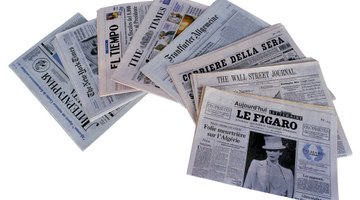
      Advertising slogans proliferated as mass-produced items competed for the consumer's dollar. The phrase "All the news that's fit to print" was introduced by the New York Times in 1896. A female executive of the J. Walter Thompson advertising agency in New York City coined the term "the skin you love to touch" for Woodbury's Facial Soap. The ad campaign, initiated in 1911, proved successful and lasted more than a decade. Businesses were not the only ones aware of the power of the written or spoken word. During World War I a British ad campaign exhorted: "Your Country Needs You." The United States modified the slogan slightly and used it in both world wars: "I want YOU for the US Army." Another World War II government slogan became famous: "Loose Lips Sink Ships."

    The Introduction of Radio

    • Radio increased the demand for catchy, memorable jingles.
      Radio increased the demand for catchy, memorable jingles.

      The spread of radio by the early 1920s increased the value of spoken jingles. The "I'd walk a mile for a Camel," cigarette campaign began in 1921. Listerine coined the sad refrain: "Always a bridesmaid, never a bride," in 1923. The Hoover vacuum cleaner company introduced the slogan: "It beats -- it sweeps -- as it cleans" in 1926. "Breakfast of Champions," was pioneered in 1935, altered slightly to "The Breakfast of Champions," and the Wheaties slogan was used into the 1990s. Coca-Cola introduced "It's the real thing" in 1941.

    The Age of Prosperity

    • Car ads enticed consumers to take to the roads.
      Car ads enticed consumers to take to the roads.

      The end of World War II ushered in a period of rising prosperity. New mediums, including television then cable TV, MTV and the Internet, expanded the range and creativity of advertising. The power of advertising slogans to command the attention and dollars of consumers cannot be underestimated. Sayings introduced decades ago are still fondly recalled by people who remember the original ads; examples include the 1950s "A little dab'll do ya" for Brylcreem; Roto-Rooters' slogan still used today, "Away those troubles down the drain"; the 1948 DeBeers ad "A diamond is forever," also still heard today. You could "See the USA in your Chevrolet," and Wisk Detergent washed away "ring around the collar" dates back to 1968.

    The 1960s and Beyond

    • The "I love New York" campaign attracted tourists to the Big Apple.
      The "I love New York" campaign attracted tourists to the Big Apple.

      The 1960s ushered in an era where advertisers focused on campaigns designed to associate a brand with specific qualities. The Volkswagen campaign coined two phrases, "Think Small," and "Lemon," referring to the color of the car. The United Airlines slogan was used from its introduction in 1966 until 1997: "Fly the Friendly Skies." The "I love New York (City)" campaign started in 1977. Ronald Reagan told us, "It's morning again in America," during his 1984 Presidential campaign.

    Advertising Slogans and American Culture

    • Nike's "Just do it," is one of the most successful ad slogans of all time.
      Nike's "Just do it," is one of the most successful ad slogans of all time.

      A recent survey of college students conducted by the University of Texas found that 90 percent of those surveyed recognized the slogans of 10 major companies. They included Nike's "Just do it," M&M's "Melts in your mouth, not in your hands," and Rice Krispies, "snap, crackle, pop." These young people recognized Frosted Flake's "they're grrreat!" and the U.S. Army's "Be all that you can be." Advertising slogans have become a part of our culture. Slogans that catch on last in our memories long after advertising campaigns end, and even after the product has disappeared.

Related Searches:

References

Resources

  • Photo Credit factory image by Kim Jones from Fotolia.com primitive soap dish image by timur1970 from Fotolia.com NEWSPAPER image by huimin from Fotolia.com Radio image by Ewe Degiampietro from Fotolia.com green chevvy image by Roy from Fotolia.com new-york city image by Pierre-Emmanue Bayart from Fotolia.com running shoe image by tim elliott from Fotolia.com

Comments

You May Also Like

  • About Advertising Slogans

    The catchy phrases that serve as advertising slogans are considered to be one of the most effective ways of drawing attention to...

  • List of Strike Slogans

    When labor unions go on strike, they frequently use slogans in chants and on signs to convey their message to the public...

  • The History of Print Advertising

    Commerce, social trends and technology have all played a role in the history of print advertising. The evolution of print advertising revolutionized...

  • History of Newspaper Ads

    In the United States fifty-seven percent of adults read a daily newspaper and sixty-seven percent read the Sunday paper, according to Professional...

  • Ads of the Early 1800s

    Advertisements of the early 1800s were very different from advertisements today. As an advertiser, you could make virtually any claim for your...

  • The History of TV Ads

    Television advertisements have been used for decades to provide revenue for television. From the humble origins of the first black and white...

  • Uses for Fells Naptha Soap

    Uses for Fells Naptha Soap. Fels-Naptha is a bar laundry additive and soap that has been around since the Civil War era....

  • How to Create a Winning Advertising Slogan

    According to the Tagline Guru Erik Swartz, a tagline is a concise phrase, next to your logo, that communicates a single but...

  • How to Increase Website Traffic using Famous Advertising Slogans

    Famous advertising slogans have already been tested and proven successful by a broad audience and incorporating any of them into your site...

  • Slogans of the 1960s

    Found everywhere from pin badges to protest songs, the 1960s was full of slogans that are still memorable today. Some of them...

  • How to Submit Commercial Ideas

    Think you have a winning idea for a commercial? Have you written a jingle that you know could drive sales of merchandise...

  • Famous Newspaper Slogans

    Newspaper slogans are a prevalent part of the industry's publishing history. Often published below the title on the front page, such slogans...

  • Ads From the 1900s

    In the 1900s, the majority of ads in periodicals were created and handled by advertising agencies. Most consumer goods companies handed their...

  • Effects of Dial Antibacterial Soap

    Effects of Dial Antibacterial Soap. Dial Soap was introduced to the public in 1948. Its innovation was the inclusion of an antiseptic...

  • Rug Doctor Vs. Bissell Steam Cleaner

    Carpet cleaning makes a home smell better and look cleaner. People with pets or allergies clean carpets more frequently to control odors...

  • History of the Volkswagen Brand

    Volkswagen, which means the people's car, was established by Adolf Hitler and Ferdinand Porsche in an effort to make a cost-effective automobile...

  • How to Market to Local Businesses

    If you are providing a business-to-business product or service, you will use different marketing and advertising methods than if you sold directly...

  • Famous Campaign Slogans

    Every four years, U.S. citizens go to the polls to vote for the candidate they want as president. Although there are always...

Related Ads

Featured