
Analog computers, unlike their digital counterparts, measure computations in completely analog ways. While a digital computer uses binary, the language of ones and zeroes to display digital increments, analog computers use physical phenomena to represent computations. This broad definition leaves room for a myriad of different devices with a variety of purposes, though they fall into two primary categories; mechanical and electrical. The advent of digital computing has left the long history of analog computers mostly forgotten.
Slide Rules
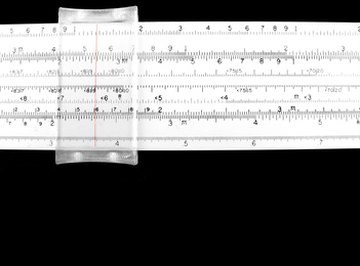
One of the simplest and most recognizable mechanical analog computers is the slide rule, a device for approximating basic mathematical calculations. Users slide a hashed rod to line up with various markings on another rod, and read the device based on the lineup of various hash marks.
Differential Analyzers
Another famous mechanical analog computer, the differential analyzer, was able to solve differential equations. With designs as old as the early 1800s, the differential analyzer was refined in the 1930s, and saw use through the mid twentieth century. The machines were large in comparison to modern computers, filling a desk sized space.
The Castle Clock
The Castle clock is a good representation of the various uses for mechanical analog computers. Al-Jarazi invented this famous computer, which was capable of saving programming instructions. The eleven foot high device displayed the time, the zodiac, and the orbits of the sun and moon. The computational portion of the device allowed users to set the variable length of the day based on the current season. Described in 1206, the computer was very complex for its period.
Electronic Analog Computers
Modern analog computers use electrical signals flowing through various resistors and capacitors to simulate physical phenomena, rather than the mechanical interaction of components. The voltage of the signal provides the pertinent readouts or displays. Electronic analog computers saw wide use in computing and military technology throughout the middle portion of the twentieth century, in such capacities as missile and aircraft testing.
References
About the Author
Andrew Mikael began writing in 2010. His articles appear on various websites, where he specializes in media and related technology. Mikael has a Bachelor of Arts in film from Montana State University.
Photo Credits
slide rule precision image by PeteG from Fotolia.com