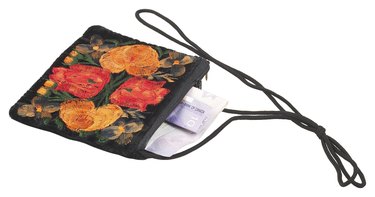
The word "appliqué" is derived from the French verb "appliquer," meaning "to put on." It refers to a textile craft in which one piece of fabric is sewn over another for a decorative effect. Appliqué is found in many forms of folk art, from Gujarati Indian tent fabrics to American colonial quilts. Appliqués range from the purely decorative to the symbolic, as in African funereal cloth.
Origins
Video of the Day
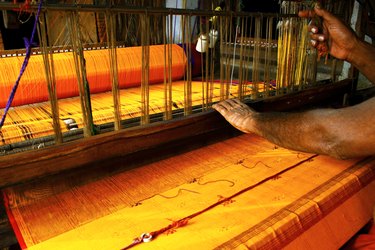
Human began knitting and weaving fabrics as long ago as the late Stone Age, about 100,000 years ago. The domestication of sheep, goats and other animals gave people much easier access to wool and other raw materials needed to make yarn and weave cloth. Fabrics worn by the ancient inhabitants of India, China and Egypt include cotton, linen and silk; these date back as far as 5,000 B.C. Once these enterprising civilizations standardized methods of manufacturing these fabrics, artisans could turn their attention to decorating them with appliqués.
Video of the Day
Indians
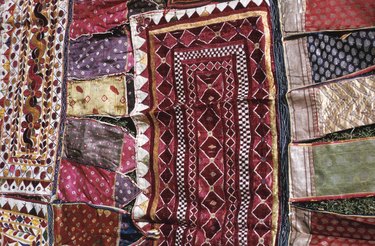
Appliqué is an essential component of many types of ancient Indian folk art. Fabrics used for ceremonial tents and religious rituals bore appliqués of elephants, peacocks, flowers and mythical characters. Appliqué became a skilled trade, performed by a caste called Darjis. In addition to being used to decorate the fabrics and clothing of royalty, appliqué was used to decorate a temple's ceremonial umbrellas and tents. Different areas developed unique styles of appliqué. Gujarati style, for example, consists mainly of patchwork in which small, intricately cut pieces of fabric are sewn over a solid colored base to create a larger image. Bihari style focuses more on a single large piece of appliqué, folded and tucked to create the desired shape, then sewn over the base fabric.
Africans
For some African cultures, appliqué fabrics became historic documents, used to describe historical events and note the reigns of particular kings. African artists in Benin used pictures the way Egyptians used hieroglyphs--each picture represented a sound or word that, when viewed together, represented a name or an event. Appliqué artists also made army pennants and clothing marked with a seal of office. In terms of everyday life, tradition among the Fon of Benin dictated that friends gather at a loved one's funeral to appliqué a piece of fabric symbolizing the deceased's life and achievements.
Native Americans
Appliqué is an important part of many Native American decorative traditions. Some tribes used the technique on shells and pottery, but others--especially in the American Great Lakes region--used fabric and ribbon appliqué to a great extent. The women of the Kuna tribe of Panama developed a unique style of appliqué called "mola," based on the designs of traditional body paint. Multiple fabric layers, fine stitches, cutouts and embroidery are all part of the craft. Molas can be made into clothing, pillowcases, placemats, quilts or simply hung as works of art.
American Colonials
American colonial women are traditionally thought of as enthusiastic quilters, but their work was usually produced only for special occasions (such as a wedding) or by those who had plenty of help with daily chores. Appliqué was a way to conserve printed fabric, which was scarce. Called "broderie perse," this technique involves cutting small shapes from printed fabric and sewing them onto a solid-color backing. When larger pieces of appliqué were used, it was usually on a medallion-style quilt. The centerpiece of the quilt is a recognizable motif such as an hourglass or starburst shape, created with strips of appliquéd scrap fabric. Many of today's enthusiastic hobby quilters use the same patterns and techniques their colonial ancestors did.