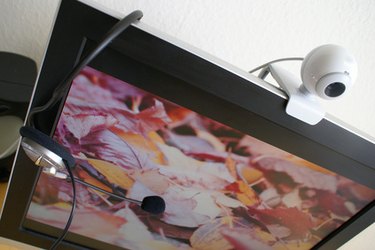
TFT Vs. LED Display

TFT Vs. LED Display thumbnail
LCD displays are flicker-free and energy efficient.

It is easy to be confused by the many different three-letter abbreviations and acronyms used to describe the features and components of consumer electronics. These terms often hide the complexity of the technology and make it easier for marketers to use hype or even falsehood to give their products a competitive advantage. For instance, TFT and LED are two terms describing electronic components used in television, computer and mobile device displays that are not competitive, but complimentary technologies.

  1. LCD Overview

    • Normally, we experience matter in one of three physical states states: liquid, solid and gas. Some natural and artificial chemicals, however, can be made to exist in an ephemeral, intermediary state between liquid and solid. Liquid crystals displays are created using materials that move between the solid and liquid phases when exposed to a magnetic or electrical field. If the liquid crystal is in solid phase, it can block light. LCDs have thousands of tiny cells of liquid crystals arrayed as picture elements or pixels that can be turned on and off in concert to form an image.

    TFT LCD Overview

    • Normally, electronic circuitry components are etched onto a thin wafer of silicon. Thin-film transistor liquid crystal display circuits, however, are made on a thin layer of specially formulated silicon applied to a glass plate. Each TFT LCD unit contains the transistors, wiring and other components necessary to turn an LCD on or off, blocking or releasing light. Colors are produced with built-in color filters. TFT LCD computer and television displays provide a flicker-free display compared to older cathode ray tube devices. In addition, TFT LCDs require less power to operate than CRTs or plasma displays.

    LED Displays

    • Light Emitting Diodes are specially formulated semiconductors that produce light when their electrons are prompted into moving from a high energy state to a lower one. Light is produced with much less energy than light bulbs or CRTs. Like TFT LCDs, LED displays can contain thousands of units working together to form an image. Individual LED units can be colored. You can control the brightness of LED displays in the same way you can dim a light bulb. Large video displays like the Times Square, New York City Jumbotron can create huge images using a few hundred large LEDs.

    LED Back-lighting

    • Televisions and computer monitors that are called LED displays actually use LCDs rather than LEDs as the picture producing element. Instead, LEDs are used as the back-light source for the LCDs. Other LCD displays use cold-cathode fluorescent lamps as back-light. According to the "LED Tele" website, some types of LED back-lights improve the quality of display color and image contrast compared to CCFL. LED back-lights also allow thinner display packages, more tolerant viewing angles, less energy consumption and longer product life.

Related Searches:

References

  • Photo Credit Comstock Images/Comstock/Getty Images

Comments

Related Ads

Featured