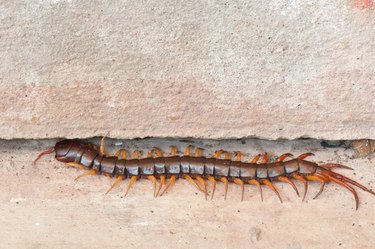
Centipedes (Class Chilopoda) eat other insects, so some people consider them to be beneficial. The rest of us consider them to be gross and don't want to see them in our homes. With anywhere from 15 to 177 pairs of legs, these odd insects look alien and they can move with a speed that makes people who fear insects shudder. Chemical controls are effective at killing them, of course, but you have several natural options as well. Sometimes getting rid of centipedes is as easy as reducing clutter, mopping up moisture and sealing the cracks in your home.
Video of the Day
Clear the Clutter
Centipedes aren't very social and spend most of their lives lurking in the shadows. Clutter gives them a perfect place to hide, especially if you have boxes and other items stacked against walls or sitting directly on the floor. These pests are as fond of outdoor clutter as they are the indoor variety, so remember to clean your lawn and garden as well as indoor spaces. Outside, rake up dead leaves, grass clippings and other moisture-holding waste. Keep firewood and compost piles least 30 feet away from your home. Indoors, elevate boxes and stored items by placing them on a pallet or wooden boards. Leave a gap between stored items and the wall as well, and generally reduce clutter wherever you can.
Video of the Day
Dry Out
Dark, damp places are centipede heaven, so make your house look more like centipede hell, if there is such a place. Fix leaky pipes and plumbing issues right away and waterproof damp basements. If your current budget doesn't allow for a complete overhaul of a damp basement, use a dehumidifier to keep the space dry. If your attic gets humid in the summer, consider running a dehumidifier there too. Install an exhaust fan in your bathroom and use it every time you bathe or shower. Centipedes die if they dry out, so do your best to create a desert landscape for them in your home.
Lock Down Your Home
Like rodents, centipedes access your home through small cracks and crevices you probably won't notice unless you go searching for them, so search for them you must. Use spray foam or caulk to seal any cracks in your attic, basement, foundation or walls. Install traps in any floor drains and seal off the areas around sump pump pipes and anywhere plumbing and electrical conduits enter your home. Install weatherstripping under doors and caulk around door and window frames to keep these unwanted guests at bay. Install a fine mesh screen over chimneys and vents lest centipedes view them as the superhighway into your home.
Don't Offer a Free Lunch
Centipedes eat other insects, so don't serve a buffet. Periodic pest control treatments through an extermination service can keep your home free of many unwanted insects, including centipedes and the critters they feed on. You can also place glue traps down along your baseboards to catch and trap the creepy crawlies that walk over them. Use caution, however, if you have pets or children. Always place the glue boards in areas where they won't be discovered or disturbed.
You can also treat the outside perimeter of your home with an insecticide, creating a chemical barrier. Do so only if you can ensure the safety of neighborhood children, pets and local wildlife. Remember that not all pesticides are legal for homeowners to use, so do your homework before you applying one. For a more natural form of perimeter control, use diatomaceous earth or borax powder rather than an insecticide. Both of these substances kill insects but do so naturally and without dangerous chemicals.