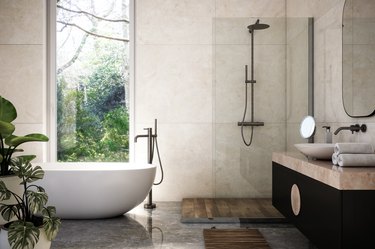
The average household bathtub holds anywhere from 30 to 60 gallons of water, typically at the higher end of that scale. There's no single standard for bathtub capacity since even bathtubs with the same overall size hold different amounts of water based on the design and slope within the tub. Some tubs, including vintage clawfoot bathtubs, are deeper than others, which adds to the total water volume the tub can hold.
Average Bathtub Size
Video of the Day
The average bathtub, designed to fit into an alcove or along a wall, is 60 inches long and 30 inches wide, with a total height of 18 inches for about 16 inches of water depth. These are exterior dimensions, so the amount of space within the tub is much smaller and more difficult to measure, as the typical tub's interior walls slope inward toward the bottom. The front or drain side of the tub is usually deeper than the back, which helps gravity drain the tub once the drain is open.
Video of the Day
Interior tub dimensions aren't standard from one model to another, so two tubs of similar exterior size may hold different amounts of water. No matter what the actual height of the tub inside, keep in mind that the tub starts draining water once the water height reaches the overflow drain port a couple inches from the top of the tub and usually in the front. This helps prevent water damage in a home if someone runs water to fill the tub and forgets the water is running, as may be the case if they leave the room.
Gallons per Bathtub
The typical bathtub capacity is 30 to 60 gallons of water, and if the tub is designed for a compact corner space, it's near the low end of that capacity, generally around 40 gallons. The average clawfoot tub holds 40 to 60 gallons of water, while a more modern freestanding tub holds 90 to 100 gallons. Tub-shower combination units sometimes have a greater capacity, averaging 60 to 80 gallons, or even more for larger models. No matter what the capacity of the tub, keep in mind the water displacement that occurs once you get into the tub; there's no need to fill the tub to anywhere near the height of the overflow drain cover when it's time for a bath.
For a comparison of water usage, the average 10-minute shower uses 21 gallons of water. This number may vary based on water pressure and whether the showerhead is a water-saving design or an older model. The Environmental Protection Agency estimates typical shower water use at 10 to 25 gallons for each shower, so even at the high end of this scale, a shower typically uses less water than a bath, unless you're using only a small amount of water in the tub, as may be the case if you're bathing a young child.