
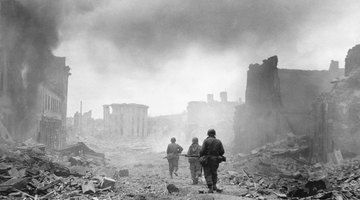

Historians say the United States’ entry into World War II was a turning point in U.S. economic history. Prior to the war, the country had been mired in a 12-year economic depression. The bombing of Pearl Harbor on December 7, 1941, ushered in a boom in manufacturing and production for the war effort followed by a post-war period of economic prosperity and the emergence of the American middle class.
Economic Impact of Government Spending
The role of the U.S. government during the war and post-war years was not to supplant private enterprise, but to kickstart it. Without the influx of deficit-financed government spending, American industry would not have been able to lay the foundation for the prosperity that followed after the war. At the time, economists were concerned that the U.S. would plunge into another recession or depression after the war ended in 1945, but the opposite turned out to be true.
Impact of the Shift to a Peacetime Economy
During the war, the U.S. economy was a command economy, prices were regulated and many consumer goods were not produced or they were in scarce supply. Food products were rationed and there were frequent shortages of everything from milk to nylons. No new cars were produced and many factories and firms were taken over by the government for the war effort. When the war ended, so did the command economy and the influence of the government on the economy decreased.
Impact of Returning Soldiers and the GI Bill
Economists at the time were concerned about dramatic levels of unemployment once American soldiers returned home after the war. One future award-winning economist predicted that employment prospects would be so dire that it would create an “epidemic of violence.” But this didn’t happen because of a combination of government-run employment programs put in place before the war during the Depression, combined with the GI Bill which sent former GIs back to school to earn college degrees.
The combination of the GI bill and other public policy initiatives, including the GI Bill of Rights that passed in 1944, offered low mortgages to returning veterans hoping to buy homes and purchase farms. Those government programs helped veterans get a strong foothold in the post-war economy.
Impact on American Consumer Spending Habits
Americans who were used to scrimping and saving during the Depression and coping with shortages and rationing during the war were ready to spend some money on consumer goods. Historians say that economic recovery was dependent on Americans buying machines that would help them modernize their lives such as new cars, appliances and other new products like televisions that came on the market. Purchasing items for the home was seen as pragmatic rather than indulgent and that was a good message to send to new families who had been raised on depression and war-time frugality.
Related Articles




References
Writer Bio
Frances Katz is a business, legal and technology reporter. Her work has appeared in The Atlantic, The Washington Post, The Week, Marie Claire, and others. She lives in Atlanta.