
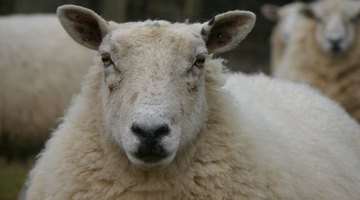


The process of removing the wool from a sheep is known as sheep shearing. The wool is clipped by skilled shearers once a year from the sheep. Raising and shearing sheep is one of the world’s oldest industries, thriving for thousands of years. The many uses of wool are the reason for the huge success of the sheep shearing business. The fleece removed from sheep is spun and woven for carpets, clothing, yarns, insulation, blankets, felt and crafting.
Domestication
Sheep were first domesticated over 10,000 years ago and raised as a food source in Central Asia. Shearing sheep did not begin until 3500 B.C. when man learned to spin the sheep’s wool. The production of wool is the oldest trade commodity known to man. The wool industry is mentioned in the Old Testament of the Bible and was the first widespread international trade throughout ancient civilizations.
New World
Most of the explorations organized by Queen Isabella of Spain were financed through her wool trading business. In the 1400’s, she paid for the voyages of Columbus and the conquistadors with profits from sheep shearing. The sheep were also used as a food source for Columbus and he left sheep in the New World when he sailed to Santo Domingo and Cuba. These sheep, known as Churras, became the ancestors of American sheep and were bred by the Navajo tribe for food and wool.
American Colonies
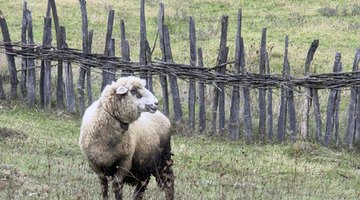
England attempted to prevent breeding and shearing sheep in the American colonies of the 16th and 17th centuries. The colonists, however, continued to smuggle sheep into America and established a lucrative wool business in the colonies. By the mid 1600’s, the Massachusetts General Court required all children to learn how to shear sheep, spin the wool and weave the wool.
Colonial Americans exported the wool from over 10,000 sheep and England forbade the wool industry in America to continue. The consequence of being found guilty of participating in the wool industry was severing the right hand of the guilty party. One of the causes of the Revolutionary War was England’s outlawing of sheep shearing and wool exportation.
Australia

In 1788, 29 sheep were successfully transported from Cape Town, South Africa to Sydney, Australia. Ten years later, 13 more sheep, known as Spanish merinos, were added to the Sydney’s flock of over 2,000 to help produce a finer grade of wool. The sheep shearing industry of Australia went on to become one of the largest in the world.
Today
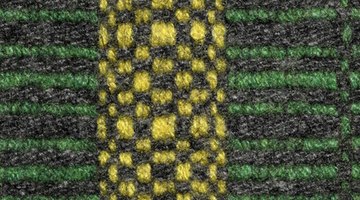
Most of the wool today is provided to manufacturers from sheep farms in the United States, Australia and New Zealand. The wool of Australian sheep, which is finer in quality than American wool, is used to manufacture clothing. New Zealand wool is coarse and is used in producing carpeting, draperies and industrial products. American wool is also coarse wool for manufacturing carpet pads, insulation, tennis balls and baseballs.
Related Articles





References
Resources
Writer Bio
Karen Curley has more than 18 years experience in health and nutrition, specializing in healthy food choices for families. She received USDA certification in food components, nutrient sources, food groups and infant/child nutrition, and holds a B.A. in English from the University of Massachusetts. Curley is also an avid gardener, home renovator, Collie breeder, dog groomer and dog trainer.