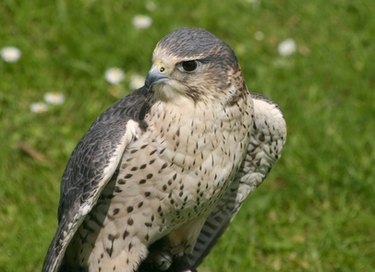
The peregrine falcon, or Falco peregrinus, is a species of falcon native to many parts of the world. The peregrine falcon can be found on every continent except Antarctica. It migrates to South America during the winter months. Peregrine falcons are also referred to as "duck hawks."
Mating
Video of the Day
Peregrine falcons usually become sexually mature at about 2 years of age. The male peregrine falcon often attracts females to nesting sights using a courtship display in the air. Peregrine falcons usually mate for life and return to the same nesting area each breeding season.
Video of the Day
Nesting
The peregrine falcon nest is referred to as a "scrape." Female peregrine falcons build their nests on the edges of cliffs, bridges or buildings. Sometimes, female peregrine falcons use old raven nests as their own. After mating, females usually lay two to five eggs. The eggs are red/brown in color with brown spots.
Fledglings
Baby peregrine falcons emerge from their nests about 30 days after the eggs are laid. They weigh about 1.5 ounces. They are covered in soft down that is off-white in color. Their eyes are open. They are completely dependent upon their mother for food and protection. Usually only 10 percent of baby peregrine falcons live to be adults.
Young Falcons
Within their first seven days of life, peregrine falcons usually double in size. They grow feathers when they are about 20 to 30 days old. They begin to fly at about 35 to 45 days old. Young peregrine falcons begin hunting at about 2 months old. They often cannot catch large prey like adult falcons. Instead, young falcons often feed on flying insects.
Adults
The lengths of adult peregrine falcons range from roughly 14 inches to slightly over 19 inches, and they vary in weight from 19 to 55 pounds. Adult peregrine falcons hunt other birds, including geese and songbirds. They also eat small mammals such as bats. Peregrine falcons can live to be about 15 years old in the wild.