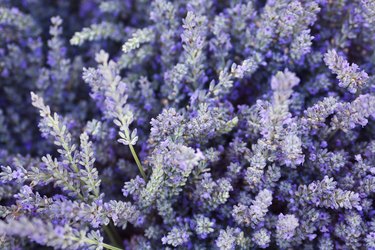
Lavender (Lavandula spp.) is a fragrant, shrubby perennial herb that can be a wonderful addition to any home garden, and it's relatively easy to grow and maintain lavender with little care. It has pale grayish-green leaves and pink to violet flowers. Lavender is often used as a hedge and can survive well indoors in the winter. Having lavender grow in your garden promises both a delightful splash of color and a pleasant fragrance.
Main Characteristics of Lavender
Video of the Day
Lavender plants grow 1 to 3 feet high and spread 2 to 4 feet wide. Depending on the region, they typically bloom in early to late summer. They're relatively easy to care for, and as a bonus, the fragrant oils repel pests, rabbits and deer while the flowers attract beneficial bees and butterflies to your garden.
Video of the Day
Lavender is native to the Mediterranean region but can be easily grown in hot and dry parts of North America. It can grow year-round in places like Southern California and the Southwest states, and many varieties tolerate humid climates like the Southeast or the Midwest fairly well.
Starting Lavender Plants
You can grow a lavender plant from seeds, but it's generally not recommended as the seeds often don't germinate. You will have better luck if you buy lavender plants that have been grown from cuttings.
If growing from seed in a greenhouse, cover the seeds with a thin layer of soil and be patient. Lavender seeds take their time and may take up to three months to germinate. When they're large enough, move the seedlings into individual pots and keep them in the greenhouse for the duration of their first winter. If you're in a colder region, move the plants outside in the spring, only after all danger of frost has passed. In hotter climate, you can plant them in the fall.
How to Plant Lavender
Lavender grows best in well-draining soil located in full sun. A little afternoon shade is helpful if you live in a hot climate. It grows well in most soil types, even moderately fertile soil, but you might need to amend the soil with organic matter if you have clay soil or if it's compacted. When planting multiple lavender plants, space them 2 to 3 feet apart.
How to Care for Lavender
Mature lavender plants will tolerate drought relatively well, meaning you often don't need to water the plants unless you grow them indoors. Younger plants need more care to bloom their best. Make sure the soil remains damp and is well-draining, especially in the winter. In overly wet soil, the plants can face fungal rots. Lavender especially likes rocky or sandy soils, and it doesn't like overly fertilized soil.
A little pruning helps your lavender plants grow well. Deadhead the lavender blooms once they start to fade in the summer to renew the plant and encourage a second flowering. Younger stems produce more fragrant, beautiful flowers on lavender plants. Once your lavender is two years old, start pruning the older, woody stems. Use sanitized pruning shears to cut one-third of those woody stems off of the plant to encourage new growth.
If you live in a cold or humid climate, it's best to keep lavender in pots and move them indoors in the winter. When keeping the plants indoors, place them near a south-facing window to allow as much light as possible.