
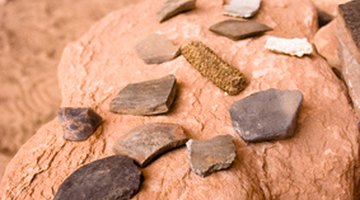

Native Americans started creating pottery more than 4,500 years ago.Prehistoric pieces of pottery tell incredible stories about the tribes they come from as well as the lives the people led. While the method used in pottery-making depends on the tribe, the process includes finding clay and other materials to form the vessel. The potter then fashions the vessel out of the clay before firing and drying the piece into a usable container.
History
In prehistoric times, Native Americans lived nomadic lives, following the seasons in their search for fresh food. They carried lightweight bags made of animal skins or woven from tree bark or reeds rather than breakable, heavy pottery. Once people began to settle in more permanent villages, they began to create pottery. Pottery from thousands of years ago has shown up in places like Iowa and New Mexico with the oldest pottery coming from Georgia. While many tribes stopped making pottery in the 1700s because of access to European-made containers, some tribes, especially in the southwest, still create pottery.
Material
Pottery requires clay collected along streams and hillsides. Often, the clay came from secretly guarded deposits. Various materials including sand, crushed rock, plant fibers and ground mussel shells were added to the clay to prevent shrinkage and eliminate cracks during the firing and drying process. Early pottery found in Georgia and other locations included Spanish moss. Crushed limestone and ground shells were also used in early pottery to help temper the pot before firing.
Prehistoric Methods
The creation of pottery during prehistoric times depended on several methods including coiling, paddling, pinching and shaping. Some of these methods get used today, too. The coiling method involves turning a lump of clay into a long coil used to build the wall of the container. The paddling method involved pounding a lump of clay against a large stone to give its shape, then pinching and shaping the pot into the final shape. The pottery dried for a few weeks before getting heated over a fire.
Decoration
While Native Americans from prehistoric times used their fingers or simple tools to add designs to their pottery, in later years, they used more sophisticated techniques. Early Georgia tribes used stamps with different designs carved on wooden paddles that they used to press onto the soft pottery. Colors were also added to decorate the pottery. In the south, the Hohokam tribe potters decorated their pots with lively forms. The Anasazi potters of the Four Corners region used repeated patterns of tight geometric motifs.
Modern
Today, a variety of artistic potters, especially from the southwest, create beautiful pottery in a variety of colors, shapes and sizes. Potters from the Hopi villages in northwestern Arizona create pots featuring wildlife and other elements of nature. The Zuni potters located near the New Mexico and Arizona border also use traditional designs featuring dragonflies, flowers and wildlife. The Navajo potters started making horse hair pottery with an imprint of a horse hair burned into the pottery during the firing process.
Related Articles





References
Writer Bio
Nancy Wagner is a marketing strategist and speaker who started writing in 1998. She writes business plans for startups and established companies and teaches marketing and promotional tactics at local workshops. Wagner's business and marketing articles have appeared in "Home Business Journal," "Nation’s Business," "Emerging Business" and "The Mortgage Press," among others. She holds a B.S. from Eastern Illinois University.